Introduction

Winemaking: The Continuation of Terroir by Other Means.®

Welcome to the Amalie Robert Estate Farming Blog, aka FLOG. By subscribing, you will receive regular FLOGGINGS throughout the growing season. The FLOGGING will begin with the Spring Cellar Report in April. FLOGGINGS will continue each month and detail how the vintage is shaping up. You may also be FLOGGED directly after the big Cluster Pluck with the yearly Harvest After Action Report. Subscribe now and let the FLOGGINGS begin!

Rusty

"This is one of the Willamette Valley’s most distinguished wineries, but not one that is widely known."

- Rusty Gaffney, PinotFile - September 2016

Josh

"Dena Drews and Ernie Pink have been quietly producing some of Oregon's most elegant and perfumed Pinots since the 2004 vintage. Their 30-acre vineyard outside the town of Dallas, abutting the famed Freedom Hill vineyard where Drews and Pink live, is painstakingly farmed and yields are kept low so production of these wines is limited. Winemaking includes abundant use of whole clusters, which is no doubt responsible for the wines' exotic bouquets and sneaky structure…"

- Josh Raynolds, Vinous - October 2015

David

"...Dallas growers Dena Drews and Ernie Pink... showed me this July three of their reserve bottlings and thereby altered my perception of their endeavors. Since these are produced in only one- or two-barrel quantities, they offer an extreme instance of a phenomenon encountered at numerous Willamette addresses, whose really exciting releases are extremely limited. But they also testify, importantly, to what is possible; and what’s possible from this site in these hands revealed itself to be extraordinary!... And what a Syrah!"

- David Schildknecht, The Wine Advocate - October 2013

Wine & Spirits

"Finding that their whole-cluster tannins take some time to integrate, Pink and Drews hold their wines in barrel for up to 18 months - so Amalie Robert is just releasing its 2008s. And what a stellar group of wines: Bright and tart, they possess both transparency and substance, emphasizing notes of rosehips and sandalwood as much as red berries. The pinot noirs alone would likely have earned Amalie Robert a top 100 nod this year. But the winery also produces cool-climate syrah that rivals the best examples from the Sonoma Coast. And the 2009 Heirloom Cameo, their first attempt at a barrel-fermented chardonnay, turned out to be one of our favorite Oregon chardonnays of the year. Ten vintages in, Amalie Robert has hit its stride."

- Luke Sykora, Wine & Spirits Magazine – September 2011

Copyright

© 2005 – 2021 Amalie Robert Estate, LLC

Showing posts with label Wadenswil. Show all posts

Sunday, May 31, 2020

Amalie Robert Estate Climate Update: May 2020


Hello and Welcome, 
  

This is an Amalie Robert Estate Climate Update: May 2020. A FLOG communication from Dena and Ernie. Amalie Robert Willamette Valley Pinot Noir.

May was a Dr. Seuss type month. First it was hot and then it was not. There was no rain and then it rained a lot. In farming you get what you get and that’s what we got!


April was the month where Ernie focused on preparing the vineyard floor for vintage 2020. The vines noticed the tilled soil and welcomed the newly germinated cover crop. Freshly cycled nutrients and frequent showers made an abundance of nutrients available to our vines. And now they are on a tear!

Our vines have just explosive growth early in the season. Our job is to capture that growth, in an orderly fashion, with three sets of trellis wires. At the end of the growing season, we want good separation of the clusters of wine berries to minimize the chance for mildew or bunch rot to take hold. And here is how we do it - by hand.

The first activity to clean off all of the excess new growth early in the season. “Nip it in the bud” is the colloquial phrase. This means to remove excess or poorly positioned shoots before they can tap into the vines limited spring resources. We are looking for about 15 growing points on any given vine. The vines are survivors and they will start the year off with maybe 30 growing points, including the shin kickers at 3 inches off the ground. Our goal is to focus the vine’s energy in those 15 growing points that will bear the best quality wine berries. Their next stop is the winery where we will ferment the sugar out of them!


This brief video will give you an idea of how we do shoot thinning, taking us from 30 down to about 15 shoots. You can check out several other exciting videos (viticulturally speaking) on our YouTube channel.


Click to watch the Shoot Thinning video at Amalie Robert Estate

The freshly germinated cover crop also has a role to play this month, Buckwheat in particular. This little plant has superpowers. The first of which is that it will flower about 3 weeks after it germinates. This is quick in the plant kingdom. The flowers provide pollen for our army of beneficial insects. Beneficial insects are the insects that eat the nasty-bad insects that like to feed on our vines. Ladybugs and earwigs are good. Cane borers and some mites are bad, but they taste good, apparently. Buckwheat flowers provide protein, in the form of pollen, for our army of beneficial insects when they can’t find any nasty-bad insects to vanquish.


The alternative is what is known as a completely “clean cultivated” vineyard floor. That means each row is barren earth. No life-giving pollen or places for your beneficial insects to hunt down those nasty-bad insects. The reasoning behind clean cultivation, such that it is, is that there will be more water available to the vine roots. Maybe, but this is Oregon and it does rain here spring and fall. Speaking of which, has anyone tried a 2007 vintage Pinot Noir lately? Just sublime…

Either way, we like the little ecosystem we have created for our “first responders”. And the cover crop and grass help maintain a healthy soil high in humus – good for the worms. It also informs the vine that if it really wants water, it needs to send those roots deep. And that is the ultimate advantage of old vines, deep, deep roots. Assuming you chose the right rootstock to begin with.

Ok, let’s change our view to 38 inches above the vineyard floor. That is where the canopy management action was happening in May. Our first of three sets of trellis wires are positioned at 8 inches above our 30 inches fruiting wire. Ultimately, the vines will top out at 90 inches above the vineyard floor. That gives us a 60 inch tall canopy – or active solar array as Ernie thinks of it. Our job is to get those 15 shoots contained within those wires and clipped into place.


You are all accustomed to the climate numbers Ernie has been tracking since we established the vineyard at Amalie Robert Estate, but he has a whole other set of workbooks that track oh so much more. There are 49 blocks planted on the property, 42 of them are numbered and 7 of them have their own alpha-numeric nomenclature. Odd for computer science people we know, but it is better than using binary or hexadecimal ordering – which we could do.

Ernie has been tracking vineyard activities for quite some time. In the case of this first set of wires, it took 568.53 hours to raise wires and tuck in all (mostly) of the vine’s shoots. That comes in at about 39.864 seconds per vine times 51,343 fruiting vines. That’s good news because it is a full 3 seconds faster than the trailing 4 year average! It took Einstein a while, but he finally came around to the “time is money” axiom, just after he finished the theory of relativity.

Ernie still hasn’t finished his book “Negotiated Reality – My Turn in the Barrel”. But thanks to the inherently unique nature of the wine business, he has an abundance of source material to pull from.

Now we thought it would be interesting to present some vine association graphics. This is what your wine looks like in the vineyard right about now, and what it is going to look like in a year or so.

First up is Chardonnay.


Then Pinot Meunier.


To complete the Champagne Deconstructed theme, we have Pinot Noir.


Here is our Syrah.


And our Viognier.


Lastly, a cluster of what will become wine berries. Bonus points available if you can accurately identify the variety.


After all those pictures, we get to some numbers. The month of May contributed 257.4 Degree Days to vintage 2020, bringing us to a grand total to date of 390.9 degree days.

The high temperature for the 30 day period was 88.9 degrees and the low temperature was 37.4 degrees. The first half of the month was cooler registering 111.6 Degree Days, however the second half of the month recorded the low temperature.

The second half of the month registered 145.8 Degree Days and recorded the high temperature.  Rainfall was 3.76 inches for the month providing a growing season to date total of 5.09 inches and is significantly more than the 1.33 inches recorded in April. Maybe that explains why Ernie is spending so much time mowing the grass.


Next up in June we will have countless flowers in the vineyard and the second set of trellis wires up. A little farther down the road, The Great Cluster Pluck will visit itself upon us in about 120 days. But until then, these little blighters are starting to make themselves known and will be doing their best to keep us entertained. Despite what you may have heard, these are considered nasty-bad insects.


iPinot COVID-19 Pivot Pricing is now in effect at $120 on six bottles with domestic ground shipping included. Just click on the Big Blue Button to browse available vintages or collect them all!


Note: You will not need a promo code to activate pricing. The pricing will automatically adjust when you select six bottles of iPinot and there is no further discount on iPinot. The shipping will be adjusted upon confirmation of your order. This is our contribution to the human condition, yours and ours. If you have any questions or need assistance, please E-mail Dena at Cuvee@amalierobert.com.

Kindest Regards,

Dena & Ernie


Friday, August 3, 2018

Amalie Robert Estate Vintage Update: 2018 Pinot Noir In Flagrante!


Hello and Welcome,  

This is a 2018 Vintage Update from Amalie Robert Estate. A FLOG communication.  

We have spied the first blazing Pinot Noir berry on Friday, August 3rd - Julien calendar day 215. And it was the cutest thing, ever! All nestled in among the rest of the green berries, our harbinger of the vintage was all aglow.


Why yes, in fact, it was a Wadenswil clone Pinot Noir wine berry. We just love that clone, especially when grafted onto the legendary 5C rootstock. 5C may be slower to mature than those less endowed, shallow rooted rootstocks, but that means longer hang time, more aroma and flavor development and less alcohol potential. Who could ask for anything more?

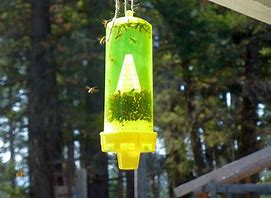
And now that we have seen that blazing berry, it is time to bait the yellowjacket traps! And let us introduce the little Vespula blighters in their full regalia. And to set the record straight, these are classified as wasps, not hornets. Hornets are a whole other mess of trouble best handled with a flamethrower from a safe distance in suitable protective clothing. That funny guy from Tesla makes one…


If you happen to be stung by one of these Vespula, take a few microseconds to notice the thorax coloring scheme. It could be the sting is not so bad from Vespula atropilosa or Vespula pensylvanica. But if Herr Vespula germanica or Vespula vulgaris tags you, well there is gonna be some extended whoopin’ and a hollerin’ we can tell you that for sure, for sure good buddy!

Now these little wasps pack a punch, but a little research can pay healthy dividends. First off, these insects are ground dwellers. They nest under shrubs and bushes. Their most favorite shrubbery happens to be the ubiquitous blackberry. Not just any blackberry mind you, but the Himalayan or Armenian blackberry - Rubus armeniacus.

The native, and most preferred, culinary blackberry species in the Great Pacific Northwest is the Rubus ursinus. Commonly known as the Pacific Blackberry. Clearly the taxonomy folks were taking a little artistic license from the bears of the Great Pacific Northwest when classifying this plant. So be it – never let the truth get in the way of a good story. Vespula horribilis anyone?


The reason our little Vespula prefers the Rubus from Armenia is that they grow along the ground in a prostrate manner. They cover a tremendous amount of area with large thorny leaves and shoots that deter predators and provide them safe haven. The first, best predator of the Vespula is the common skunk. The risk, apparently, is worth the reward and we give these monochromatic wasp hunters a wide berth.

Right, now we know where they live. The eradication of the Vespula is virtually impossible and while a worthy goal, it is the equivalent of trying to boil the ocean. We are just trying to make wine. So one day, there was some clever fellow who devised a totally tubular yellowjacket trap. Bravo!


What we see depicted here is successful communication. The trap has been baited with a strong yellowjacket aphrodisiac. The yellowjackets are picking up on what’s going down and they want in on the action. All is right with the world. But wait, there is more. Enter the wild Oregon caught Chinook salmon.

You see these traps come from the factory with a synthetic attractant. And while most of the Vespula are good with that Herr Vespula germanica is having none of it. And it just so happens we know his weakness, it is freshly ripened wild Oregon caught Chinook salmon.

Our local fish monger knows when the first Pinot Noir wine berries start to turn color because that is when we show up at his door looking for fresh wild Oregon caught Chinook salmon scraps to trap our little Vespula. Of course, we take a fillet as well to have with Pinot Noir – for quality control purposes, of course.

Alright, let’s bring it home. We start out with about 20 of these totally tubular Vespula condos and start packing them full of salmon scraps. This is best done about an hour before daylight in a Vespula proof enclosure. Then we have specially modified coat hangers that fit through the molded hole at the top of the trap (those guys thought of everything.) Then, just as first light is being cast onto the vineyard we hang the traps on our south facing steel end posts very near the Rubus from Armenia.

It takes a while for the first early adopters to arrive. They buzz around investigating this new addition to their environment. Then around noon time, the sun has warmed up that steel end post and the wild Oregon caught Chinook salmon scraps inside the trap start to “ripen.”

Then look out! Herr Vespula germanica has picked up the scent and he is coming in hot! From this point forward, it is just a matter of hours before the trap is full and we must reload.

While it is quite heartwarming to see these traps fill up so quickly, this in fact is one of the necessary harvest pre-functions. Once all the blackberries are gone, there is only one fruit left to eat and that is the wine berry. The Vespula will attack the wine berry which has done nothing wrong, just ripen in the sun. They will eat all of the pulp inside and leave a hollowed-out skin. They like the sweet, but can’t seem to handle the skin tannin.


The problem arises when the harvest humans start to interact with the Vespula environment while the Vespula is consuming said wine berry. The problem is exacerbated when several Vespula, under the direction of Herr Vespula germanica, are feasting on adjacent clusters. You can hear the distinctive whoopin’ and a hollerin’ from quite a ways off.

So, we have about 45 days of ideal weather to “harvest” as many of these Vespula as we can so that they are not around during harvest operations. The other way to go about this is to use a can of aerosol hair spray and a lighter - mini flamethrower if you will. But as Ernie would remind you, experience is what you get when you don’t get what you want. So we have moved on to the wild Oregon caught Chinook salmon scraps.

We are still predicting a late September to early October start to harvest, but in the agrarian world, anything can happen between now and then - and most likely will. Are we going to get some rain? Oh, we hope so!

Now if you just can’t wait, you can check in on the spaghetti harvest here. While they do not have to contend with the dreaded Vespula, they do have the spaghetti weevil, and Vespas. Watch out!


Kindest Regards,

Dena & Ernie

Tuesday, April 3, 2018

Amalie Robert Estate: 2016 Wadenswil Selection at the Willamette Valley Winery Association Pinot Noir Auction


Hello and Welcome, 

The 2018 Willamette Valley Winery Association Pinot Noir Auction is this weekend. The pre-event festivities begin Friday, April 6th and the auction takes place Saturday, April 7th. Note: Wine flies free on Alaska Airlines. Just saying... 

Amalie Robert Estate has contributed a very special 10 case lot of Wadenswil clone 2A as our inaugural auction offering. The wine is a single barrel selection from a one acre block of estate grown Wadenswil clone 2A planted at the turn of the century and fermented with indigenous yeast and whole clusters. 


Wadenswil, yeah we do that. And we have been doing it for some time now. Our sedimentary soil series is called Bellpine, a well drained silty clay loam. Wadenswil clone 2A is a Swiss selection of Pinot Noir. Some things just work, and some things are just farming marvelous! This is one of those things.

Where the Wadenswil grows – Ernie and his Bellpine soil


We present the following links, helpful information and Amalie Robert Estate Wadenswil history to fully prepare you for the Wadenswil experience.

What is Wadenswil clone 2A? Read the Amalie Robert Estate: Interview with a Clone - Wadenswil 2A

Tell me more about the Amalie Robert Estate Auction Lot: 2016 Vintage Wadenswil Selection Pinot Noir

Planning to attend? We look forward to sharing our Wadenswil clone 2A with you. And maybe some delicious Chardonnay and top rated cool climate Syrah.

Can't attend, but you simply must have this wine? Please contact Dena at dena@amalierobert.com for information on submitting a proxy bid.

Follow this link to learn more about the Willamette Valley Winery Association Pinot Noir Auction: Willamette - The Pinot NoirAuction


Now the good stuff: A historical vertical of Wadenswil clone 2A from Amalie Robert Estate 2007 - 2014 as reviewed by Josh Raynolds.

2014: Amalie Robert Estate Pinot Noir Wadenswil Clone Willamette Valley
Limpid ruby-red. Highly perfumed aromas of black raspberry, cherry cola, exotic spices and sandalwood pick up a floral overtone as the wine stretches out. Palate-staining red berry preserve, blood orange, rose pastille and spicecake flavors become deeper with air while maintaining vivacity. Finishes on a suave floral note, displaying superb clarity, lingering spiciness and silky tannins that merge smoothly into the energetic fruit. 93 Points, Vinous.

2013: Amalie Robert Estate Pinot Noir Wadenswil Clone Willamette Valley
Brilliant red. Spicy and brisk on the nose, displaying lively red fruit, floral and succulent herb character and a hint of vanilla. Juicy, focused and light on its feet, offering energetic raspberry and bitter cherry flavors that take a sweeter turn as the wine opens up. Shows very good depth for the vintage, with no rough edges and a long, subtly tannic finish that leaves notes of cherry pit and star anise behind. 91 Points, Vinous.

2012: Amalie Robert Estate Pinot Noir Wadenswil Clone Willamette Valley
Brilliant red. Potent mineral-tinged aromas of black raspberry, cherry-cola and smoky Indian spices, with a hint of lavender in the background. Concentrated yet lithe on the palate, offering intense dark berry compote and bitter cherry flavors that slowly become sweeter with aeration. Chewy tannins come on late, adding grip to the very long, penetrating, fruit-driven finish. 93 Points, Vinous

2011: Amalie Robert Estate Pinot Noir Wadenswil Clone Willamette Valley
Lucid red. Red and dark berries, incense, lavender and smoky minerals on the pungent, exotically perfumed nose. Juicy black raspberry and cherry flavors are lifted and given spine by juicy acidity and a hint of peppery spices. Finishes lithe, spicy and penetrating, with fine-grained tannins and emphatic floral and cherry pit qualities. 92 Points, Vinous.

2010: Amalie Robert Estate Pinot Noir Wadenswil Clone Willamette Valley
Bright red. High-pitched cherry and Asian spice aromas are deepened by notes of sassafras, woodsmoke and cola. Stains the palate with sappy red and dark berry flavors and tangy acidity adding lift and cut. An exotic floral nuance emerges with air and carries through a long, sweet and persistent finish. While this energetic pinot is built to age, it has a lot of immediate appeal. 93 Points, Vinous.

2009: Amalie Robert Estate Pinot Noir Wadenswil Clone Willamette Valley
Bright red. Heady, exotic aromas of candied red fruits, sandalwood, lavender and rose. Juicy, sweet and focused, offering fresh raspberry and bitter cherry flavors that put on weight with air. Shows an array of spice and floral qualities on the finish, along with notes of candied raspberry and bitter rhubarb. Wild stuff, and balanced to age. 93 Points, Vinous.

2008: Amalie Robert Estate Pinot Noir Wadenswil Clone Willamette Valley
Bright red. Displays an array of red and dark berry scents, along with notes of cherry-cola, pungent herbs and baking spices. Sappy, deeply pitched cherry and black raspberry flavors are well concentrated but surprisingly lively, picking up a zesty mineral quality with air. Dusty tannins add grip to the sweet, incisive finish. This benefits a lot from air; it was fermented with all whole clusters, as are all the pinots here. 91+ Points, Vinous.

2007: Amalie Robert Estate Pinot Noir The Reserve (100% Wadenswil) Willamette Valley
Limpid red. Bright strawberry, raspberry and Asian spices on the nose, with a seductive note of potpourri that gains strength with air. Sappy, spicy, attractively sweet red fruit flavors are energized by tangy blood orange and white pepper nuances, with a note of medicinal cherry adding grip. Plays deep cherry off tangy strawberry on the finish, which is precise, lively and very long. This will age on its energy and balance. 93 Points, Vinous.

Kindest Regards,

Dena & Ernie


Thursday, April 20, 2017

Amalie Robert Estate 2017 Spring Cellar Report: Interview with a Clone - Wadenswil 2A

Hello and Welcome,

This is the 2017 Spring Cellar Report from Amalie Robert Estate. The 2017 vintage brings us the inaugural “Interview with a Clone – Wadenswil 2A” feature story.

Let’s begin with the status of the cellar – it is cold. And not only is it cold, being encased in 1,200 tons of concrete, it is also damp. That pretty much sums it up: cold and damp, which is ideal if you are an oak barrel entrusted to hold some of the most ethereal and sublime Pinot Noir on the planet (from Willamette) known as Wadenswil clone 2A.

What’s in a name? Some names you have to live with, other names you get to choose. Kind of like the old adage: you pick your friends, but God picks your neighbors. Kind of like trying to name a sub-ava, we can try to gain government approval for a name everyone agreed to use, or we can accept a government issued name that no one wants or agreed to. Hmmm…


The Wadenswil clone was named by the Swiss. That is the origin of the clone as there happens to be a very cute little hamlet in Switzerland outside of Zurich named Wadenswil with a population of around 20,000 people. Which is why you cannot label a wine as Wadenswil, but you can label it as Wadenswil Clone. The umlaut, while serving a phonetically important function in Switzerland, is really just a pain-in-the-ass for most Americans. If it were so important stateside our keyboards would have a key for it. While we respect the Swiss, their language, culture and Wadenswil clone, we have abandoned the umlaut for our domestically produced Wadenswil clone Pinot Noir. We love the clone, but you can keep the umlaut on your side of the pond.

However when the Wadenswil clones were sent to America in 1952 and cataloged by the farming geniuses at the University of California in Davis, they named them clone 1A, 2A and 3A. It seemed that clone 1A was late to ripen and that can cause you trouble in a marginal climate. Clone 2A was more in line with how Pommard (clones 4 and 5) was ripening, however clone 2A was reported to make less compelling wine than clone 1A, in years when clone 1A could be successfully harvested (by humans and not the birds.) Clone 3A was culled from the selections due to virus.


Farmers, being the risk-averse people they are, tended to go with clone 2A. However Pinot Noir growers are a breed unto themselves, and so it was that David Lett came to Oregon in 1965 with a carload of clone 1A cuttings from California. For anyone who has had the pleasure of tasting his 1975 Eyrie South Block Reserve Pinot Noir, you know that he knew what he was doing.

And it is really hard to mention David Lett without referencing his philosophy on Pinot Noir, Wadenswil most likely, so we will do that right here and now. Pinot noir “should be approached like a beautiful woman—with respect, some knowledge and great hopes.”

So that, with a pretty bow on top, is why Wadenswil clone 2A is widely planted at Amalie Robert Estate. But the question that we need answered is: Why Wadenswil clone at all?


Right. Let’s get started with the interview. Here is a nice looking barrel of wine, let’s pull a sample and check it out. What can you tell me about yourself?

Well, it was mid October last year, and I was just hanging out in block 3 with a bunch of other clusters when this guy comes up and snatches me off the vine and drops me in a bucket.

A drop in the bucket? That sounds pretty harsh.

Yeah, well its farming. You should see the hedging machine this guy’s got. We all just pray he gets a good night’s sleep and keeps the tractor centered in the row. So me and about 80 other clusters are sitting in this bucket when someone grabs us and starts spreading us out in a harvest bin. Then this other guy starts turning everyone over, looking at our backsides, and front sides and then he actually plucked a wine berry off one of the other clusters and ate it right there in the vineyard!

And this was harvest, last year?

Yeah man, that was last year. We had an idea what was coming though. There was some of that “Pommard” in block 14 and they took those clusters a few days before us. We had some time to prepare, but when the harvest trailers and crews start rolling up at the end of your rows, you gotta figure your number just came up. And these guys are precise. I mean it was 36 buckets of clusters per bin and that’s it. Full stop. Show’s over, move to the next bin.

I see your point. So how did you get from your harvest bin to this barrel?

Well, once they got us all in our harvest bin, they snapped a lid on us. Something about yellow jackets being around, but they ended up trapping one of them inside with us. That was a big surprise for somebody when they took the lid off at the winery. I can tell you that for sure! And then we all got weighed. That was nice.

Then something very interesting happened. It was all kinda surreal. When it was our turn, we were loaded in this tilter that lifted us above this inclined elevator. It looked more like an escalator, but they called it an elevator. And it had paddles that came up every foot or so. We never saw anything like that all year in the vineyard.

The tilter started to tilt and clusters just started falling into this elevator. The paddles would come up and catch them and take them to the top. I couldn’t see where they went, but I kept hearing this thud, thud, thud. And there were two guys, maybe three, one on each side and they would pull out leaves and other stuff that got in with the clusters. I was holding
my own pretty good for a while, but then I could feel the clusters below me give way and then I fell into the elevator. Those guys on the sides, they were some kind of inspectors. They would pick up random clusters and look them over for mildew or anything they didn’t like. I tried not to make eye contact. Once I made it to the top of the elevator, I found out in a hurry what was making the thud sound – it was me as I dropped into a fermenter! Not everyone made it in, but those of us that did were still intact. We were still whole clusters.

Then everything went full stop. It was break time and they were having coffee and chocolate banana bread. It must have been real good too, because there wasn’t a peep out of anyone. Then things started to move around us. They wheeled this machine over the top of our fermenter and we could hear a motor running. A second motor, not just the elevator.

We found out it was a destemmer and I am glad to tell you we were the first bin to go in the fermenter, because the next 3 bins had it real bad. They raised the elevator as high as it would go, and the clusters would drop into the destemmer. They were trapped in a rotating cage and then a paddle bar would rotate inside the cage. There was no way through without getting knocked off the stem. And that’s what happened. All the berries were de-stemmed and they dropped in on top of us. Their stems were ejected out the backside of the destemmer, and that was the last we saw of them.

For the next four weeks we just sat in that fermenter, stewing in our juices. Once a day they would take our plastic cover off and punch us down. But day by day we were able to mount more and more resistance. You see, we were starting to ferment and I am not so sure they knew we could do it on our own. But we did it. Each day we would form a cap, mostly the de-stemmed berries would do this as the rest of us were trapped at the bottom of the fermenter. By the third week we put up a cap that was about 20 inches thick! Yeah, they were working up quite a sweat trying to put us down.

By the end of the fourth week, we were spent. All of our sugars had fermented out. At the end, I made it to the top of the fermenter and I could see the writing on the wall. We were fermenter Q and we were scheduled to be pressed the next day.

I don’t really remember much about that except I woke up in a very dark and cold place. I later found out I was in this barrel. A guy comes by about once every 3 months or so and tops me up. You know how it is, a little evaporation and maybe a sample or two and then I need to be topped up.

Speaking of barrels, how did you like this barrel? It is a Billion barrel, right?

I don’t really know what kind of barrel I am in. Its all pretty dark in there and I don’t get out all that much. And the guy that tops me off, sometimes he gets my bung pushed in too far, and that is somewhat, ah, uncomfortable.

What has been you favorite part of the process so far?

I still think about our first day at the winery. Getting weighed was the highlight for me.

What about the other clones? Are they all a pretty good lot?

Yeah, well the guy that farms us is pretty strict. If anyone gets out of line, they are more likely than not to be thinned off before harvest. Then you’re farmed off, sitting on the ground, unripe, desiccating in the sun. Not even a raccoon is going to look at you with any interest. Sometimes one of the harvest guys will add one to his bucket, but it gets picked out almost right away at the harvest bin.

Let’s move on and talk about aroma and flavor. You said you were from block 3. That is all sedimentary soil and you are about 1,200 vines grafted onto 101-14 rootstock. Is that right?

You got that right, Leroy! HOOA!

Don’t you mean Hoah?

Do I stutter? Do your ears flap over? I mean HOOA!

Right. Duly noted. So as Wadenswil clone 2A, grown in block 3, what are your most profound characteristics?

Well block 3 happens to be one of the coolest blocks out here in this prized piece of dirt. I mean we are east facing with just a little slope, maybe 3 to 5 degrees. We get the cool morning sun and are protected from the harsh afternoon sun by the virtue of the small forest at the edge of the property. Those Pommard guys in blocks 5 and 6 can get hammered with birds, but we are pretty safe out here. And all that adds up to hang time my friend, sweet and simple hang time.

You see, the cooler it is the longer it takes to build sugars. But our aromas and flavors only develop if we are out here long enough. So hang time in block 3 can mean more aromas and favors at lower sugars. I see those guys in block 15. They are due south facing and they take a lot of heat. They do their best, and they make great wine, but I like it here in block 3. And, get this, our rows run east west, not north south like all of the rest of the Wadenswil clone 2A planted out here. Except block 35, but they are at the top of the vineyard. We can’t see each other, but I know where they live. We call it the “nose bleed” section!

Wow, block 3 sounds like a place I would want to hang out in a warm vintage.

We may be cool, which is certainly to our advantage in a warm year, but we can kick some serious acid in a tough year like 2007. At the end of my barrel maturation period, I am going to end up in some bottle and they are going to stick a label on me. I won’t be able to see it, but the other guys will tell me what it says. Turns out, block 3 was made into a wine called The Reserve back in 2007. And, it was the highest rated Pinot Noir from the vintage racking up 94 points. That was all the points they gave out that year, and we got them all! HOOA!

Alright, this has been very informative. I appreciate your time and I must say what a lovely color. Let’s move over to another rack and see if we can find another block of Wadenswil clone 2A.

This looks like block 10 from Fermenter XX in a first fill barrel. Hello there.

That’s right honey. It’s a brand farming new barrel, so don’t be dripping anything on it. You know, there are some people who come in here and they show respect and they don’t drip and if they do, they clean it up and they apologize. I just want you to know where you are at.

Thank you. It appears that block 10 has an attitude.

Are you showing me lip? It’s OK if you do. I mean you have to if you are going to try the wine. But don’t get all carried away with it.

Certainly. I understand. Now, block 10 is also sedimentary soil, but you are grafted onto 5C rootstock and your rows are oriented north south. Did I miss anything there?

Elevation baby. And aspect. Elevation and aspect. I am a little bit higher in elevation than that crazy block 3 character, but not enough to slow me down in cool vintages. I also face southeast, which is a blessing when you are trying to tease out the seductive and sultry side of Wadenswil. Are you getting me?

Yes. In fact I am getting you right now. Wow. These flavors and aromas are blowing my mind. Tell me how and why this is.

Say it like you mean it, honey! Aroma and flavor, flavor and aroma. That is what I do and I do it really farming well. There are a lot of things happening here, so try and keep up. First off, we have to talk about leaf pull. Even in my particular idiom, I don’t want to over expose my assets, if you know what I mean. A little is fine, but always leave them wanting more. If you take too many, the aromas and flavors move beyond pheromonic and turn gaudy. Not too pretty in Pinot Noir.

And then we need to get down to it, and that means rootstock. Do you know what I am talking about? There are plenty of rootstocks out there, but only one can give me the hang time to get my clusters so amped up. And that rootstock is 5C. Deep rooted? You don’t know the half of it. 5C comes up from Texas, and you know those roots are looking for anything wet they can grow into. And if they can’t find it, they start heading deeper into the soil profile until they get what they are looking for. And that is the story behind developing those sublime olfactory experiences. Let’s just say, I am not the first block to be taken off the field at harvest time. But honey, when it’s good, it is so good. And at about 1,500 vines, there ain’t that much to go around, if you get my drift.

Ok. Thank you. Ah, let’s move along the rack here.

Block 30 is high elevation Wadenswil 2A grafted onto 3309 rootstock facing due south. How are things?

Well, you know he didn’t want me, at first. We were at the nursery when he was loading all of the other vines and I heard the nursery man say the Wadenswil 2A on 101-14 plants had all died. Bad fertilizer or something. But he said he had extra Wadenswil clone 2A on 3309 and he could substitute that. I guess he wanted the vines more than he wanted to keep that acre open, so they loaded me up and brought me home. Things were fine the first three years. All of us upper blocks were planted at the same time and we went from 2-buds, to heads to canes together. The first year we fruited was OK, but I knew he was putting me under a lot of scrutiny.

You see, 3309 rootstock has trouble with nematodes. These are extremely small little worm like creatures that tap into our roots and draw energy from the vine to live. This used to be an old cherry orchard, which are notorious for hosting nematodes. All of the other rootstocks are pretty resistant, but that’s not me. I had nightmares that he was going to rip us out and replant with a different rootstock.

But clearly, that has not been the case. What happened to change his mind.

I am the only Wadenswil grafted onto 3309 out here, and it seems that nobody else can do what I do. And what I can do is deliver the goods in any growing season from hot to cold, dry to wet and anything in between.

I knew we were safe a couple of years back when they had to pick a single barrel of wine for the Salud Pinot Noir auction. It’s got to be the best. People bid on just 5 cases of wine from a single barrel and the rest of that barrel gets blended into a top end wine, like Amalie’s Cuvée or something. That’s some pretty good juice, by the way.

So they picked our barrel a couple of years back. Best of the cellar they said. Turns out their top field guy also happens to like block 30. Sometimes in the morning he sings while he is working with us. It’s really cute. Anyway, our lot was pretty well received, and we earned about $1,500 a case for the Salud cause. That is when I knew were safe, for now. But we could be living on borrowed time.

Well, from what I am getting in this glass, I would have to say you have established yourself as a top performer.

The one thing I can do really well is texture. All of the blocks are different and he tries to farm us to maximize the elegant side of Pinot Noir, but the whole cluster tannin is kind of an unknown variable for each block. It just so happens, that I can get it right more often than not.

You notice whole cluster influence in the aroma as herbal or tea leaf. It’s so funny when he is down here he keeps saying “Darjeeling” like it is some code word for the secret op’s guys. Clearly it’s not. They use “Hashbrowns” but don’t tell anybody.

As the wine starts out, the mid palate and finish are pretty unyielding and show a lot of astringency. Some guys will add an egg white to the barrel to soften the stem tannins before bottling, but not this guy. No way, never, never. So we sit on the stem tannin and let it naturally evolve. I have been here for over a year, and I still have more time to go.

After we all get to bottle for a few years, that’s when it really starts to unwind. The astringency softens and turns into a refined spice, tingly tannin sort of thing. At least that’s what he says, like every damn time! And something about skin tannins are more monolithic and don’t much evolve with time, but stem tannins do. Apparently aged Pinot Noir is really his thing. That and duck, he is always going off about duck and Pinot Noir. As if that’s not bad enough, you should hear him go on and on and on about those Syrah barrels. There is just no end to it.

Block 30, thank you for your insight, and textural connotations.

Final interviewer comments: That wraps up my interview with a clone – Wadenswil 2A, sans umlaut. There were certainly some differences in the clone based on where they were planted and the rootstock they were grafted onto. The barrels obviously impart some influence, if not attitude. All good stuff to be sure.

However, I can’t help but wonder if the guy farming this field just got lucky with his site. Clearly Wadenswil in the Willamette Valley is not that widely planted, certainly not to as much acreage as Pommard. David Lett made it work, but that was with clone 1A. Maybe it’s true, that luck favors the prepared mind and some hard work.

But I think he might be onto something here in light of his experimental planting of Wadenswil clone 2A on 4 rootstocks. And they are all right next to each other. Surely, his regime will be to keep all of those small blocks separate as they ferment and barrel mature. Add in the weather variability from year to year, and these blocks may very well produce some compelling testimonial to Wadenswil clone 2A in the Willamette Valley.

I would very much like to return in a few years time to make the acquaintance of these new in-plants. And it looks like the 3309 in block 30 is going to be hanging tough, but I have a feeling that this grower knows that lightning rarely strikes twice. And if it does strike twice, you had better be ready for it.

Kindest Regards,

Dena & Ernie