Introduction

Winemaking: The Continuation of Terroir by Other Means.®

Welcome to the Amalie Robert Estate Farming Blog, aka FLOG. By subscribing, you will receive regular FLOGGINGS throughout the growing season. The FLOGGING will begin with the Spring Cellar Report in April. FLOGGINGS will continue each month and detail how the vintage is shaping up. You may also be FLOGGED directly after the big Cluster Pluck with the yearly Harvest After Action Report. Subscribe now and let the FLOGGINGS begin!

Rusty

"This is one of the Willamette Valley’s most distinguished wineries, but not one that is widely known."

- Rusty Gaffney, PinotFile - September 2016

Josh

"Dena Drews and Ernie Pink have been quietly producing some of Oregon's most elegant and perfumed Pinots since the 2004 vintage. Their 30-acre vineyard outside the town of Dallas, abutting the famed Freedom Hill vineyard where Drews and Pink live, is painstakingly farmed and yields are kept low so production of these wines is limited. Winemaking includes abundant use of whole clusters, which is no doubt responsible for the wines' exotic bouquets and sneaky structure…"

- Josh Raynolds, Vinous - October 2015

David

"...Dallas growers Dena Drews and Ernie Pink... showed me this July three of their reserve bottlings and thereby altered my perception of their endeavors. Since these are produced in only one- or two-barrel quantities, they offer an extreme instance of a phenomenon encountered at numerous Willamette addresses, whose really exciting releases are extremely limited. But they also testify, importantly, to what is possible; and what’s possible from this site in these hands revealed itself to be extraordinary!... And what a Syrah!"

- David Schildknecht, The Wine Advocate - October 2013

Wine & Spirits

"Finding that their whole-cluster tannins take some time to integrate, Pink and Drews hold their wines in barrel for up to 18 months - so Amalie Robert is just releasing its 2008s. And what a stellar group of wines: Bright and tart, they possess both transparency and substance, emphasizing notes of rosehips and sandalwood as much as red berries. The pinot noirs alone would likely have earned Amalie Robert a top 100 nod this year. But the winery also produces cool-climate syrah that rivals the best examples from the Sonoma Coast. And the 2009 Heirloom Cameo, their first attempt at a barrel-fermented chardonnay, turned out to be one of our favorite Oregon chardonnays of the year. Ten vintages in, Amalie Robert has hit its stride."

- Luke Sykora, Wine & Spirits Magazine – September 2011

Copyright

© 2005 – 2021 Amalie Robert Estate, LLC

Showing posts with label bud break. Show all posts

Thursday, April 22, 2021

2021 Earth Day, Vineyard Anniversary & Bud Break

 Hello and Welcome, 

 
Willamette Valley cherry blossoms, aka popcorn trees. 
 
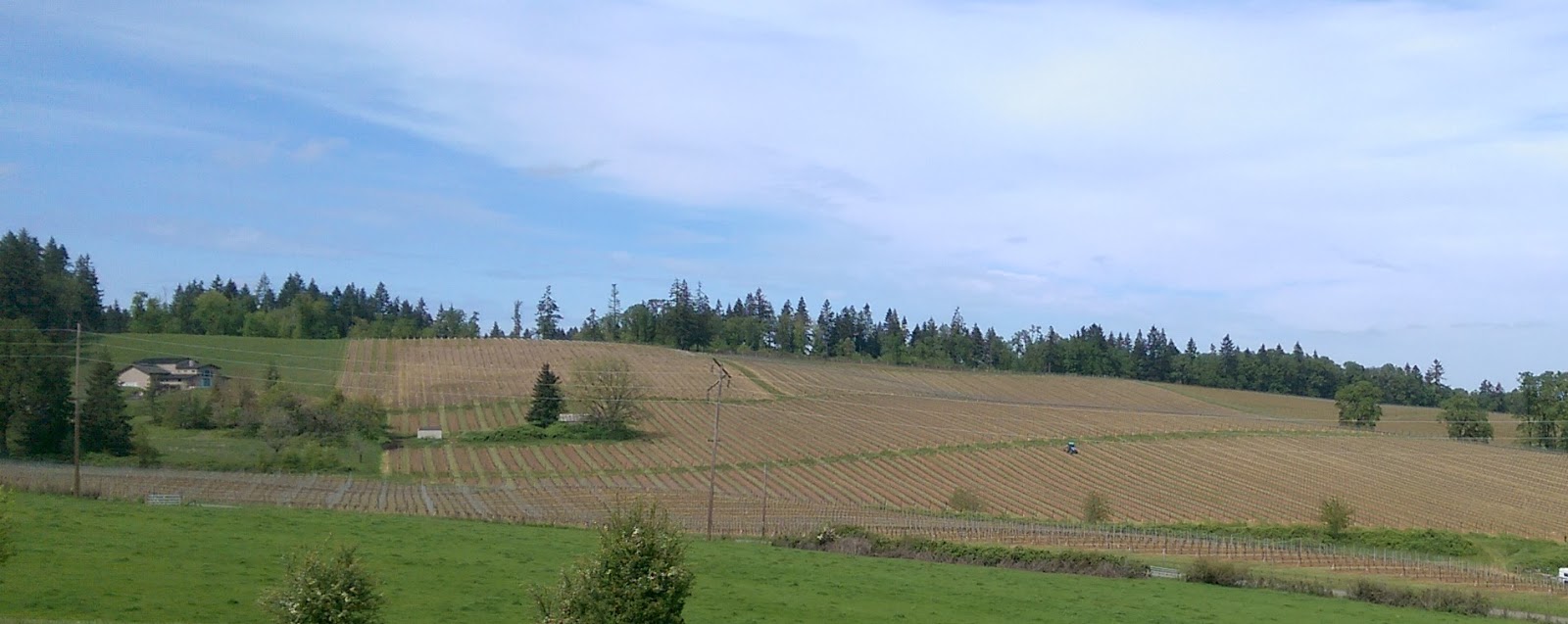
The popcorn trees are blooming, and the bumble bees are tending to the trees and the grape hyacinths. The swallows have returned from their southern vacation to build nests and hatch their chicks. The last of the daffodils are making way for the first tulip and iris sightings. Bud break on April 15th in the Pinot Noir vines puts us on notice that in about 20 weeks they will be ready for The Great Cluster Pluck – Vintage 2021, the Year of the Dijon Clones. It’s Earth Day in the Willamette Valley, and don’t we know it! 
 
Bumble bees are responsible for nearly 2/3's of US pollination.

A FLOG communication (Farming bLOG) by Dena & Ernie from Amalie Robert Estate. Oregon Willamette Valley Chardonnay and Pinot Noir. Have a look and see what we see on Instagram @AmalieRobert Estate. We are ramping up on FaceBook! (If you don’t like us, we don’t wanna know…)
 
Welcome Vintage 2021! Good luck, you are going to need it!

In the vineyard business, bud break is the visual start to the vintage. Those buds, they look oh so innocent and cute just waking up to the possibilities of vintage 2021 - all 1.4 MILLION of them. Yeah, they look cute now, but give them a few weeks and those buds will have produced 6-foot canes that will need trellis catch wires and their first hedge. They grow up so fast…
 
We welcome the farming challenge and in turn, celebrate Earth Day. While we focus on the land, because we grow wine, it is important to remember that 71% of the Earth is covered with water.
 
So sure, go ahead and plant a tree this weekend, but if you are wading into aquaculture that is a whole different matter. As you make your way through life’s carnival, it is important to remember: Don’t pet the alligators.
 
And it’s our Anniversary! We established the vineyard at Amalie Robert Estate on Earth Day at the turn of the century. When we found the vineyard, Mr. Shingler had his Montmorency cherry orchard sitting on top of it. That was 1999, and 80 tons of cherries and 1,188 cherry trees later we are growing about 55,000 vines over 36 acres. They are viticulturally spaced at 4 feet apart.
 
Our little red wild cherry sporting popcorn blooms.

But there are three wild cherry trees we keep. One is a plump dark red cherry, one is a Montmorency cherry, and one is a little red wild cherry with a pit that makes up about 95% of the diameter. The latter of these three cherries are mostly propagated and sold by dentists.
 
The last of the first 15,000 vines went in the newly prepared soil 22 years ago. And while our communication has become more and more digital with E-mail and Zoom and INSTANT text messaging, we still find time to speak to each other face to face. Maybe even over a glass of wine. Remember those days? They are coming back into fashion. Sometimes the old ways are still the best ways… just as soon as we can get rid of these masks.
 
The numbers. We don’t have any climate data to share yet, that will be coming at the end of April. What we do have is the roadmap for vintage 2021. Bud break is the first major event and we were lucky to escape any frost damage from the near freezing temperatures at the start of April. But every vineyard site is different and low elevation sites without proper air drainage may not have fared as well.
 
They say old cherry orchards make for good vineyards and frost damage is exactly why – cherry trees bloom (flower) about the same time vines experience bud break. Cherry trees are an indicator plant of where you could plant a vineyard. Just imagine if Johnny was spreading cherry pits instead of apple seeds... Oh man!
 
Cherry trees are an indicator plant for wine grapes.

If a cherry orchard has a history of frost damage when they bloom, there is a very good chance that vines planted there will suffer frost damage during bud break. And if those buds get frosted and die, that pretty much cancels the vineyard growing season. Kinda like smoke taint, but at the beginning of the growing season, not the end.
 
The next big event in the vineyard is bloom (flowering) which is what the cherry trees are doing right now. The time from bud break to bloom is quite variable and hard to predict. However, once we see bloom we are on autopilot. For Pinot Noir in the Willamette Valley, the historical average is bloom plus 104 days equals harvest. Now harvest may change a few days either way depending on Mother Nature, but no matter, Willamette still rhymes with Janet, damnit.
 
Kindest Regards,

Dena & Ernie

Tuesday, May 5, 2020

Amalie Robert Estate Climate Update: April 2020 & Library Pinot Noirs


Hello and Welcome, 
 
This is the Amalie Robert Estate Climate Update: April 2020. A FLOG Communication from Dena and Ernie @AmalieRobert Estate. 
  
It has just been a lovely Willamette Valley start to the growing season. Wind, rain, sun and clouds provide an ever-changing landscape of environmental conditions that afford us the opportunity to conquer the agrarian challenges of getting the vineyard ready to bear fruit. And of course, it would not be springtime in wine country without a visit to the shop for some equipment maintenance. Then just wait until you see the numbers! They are just one sig-fig this year, but they are stunning.


First off, we have a little housekeeping to attend to. We have begun using Evite to help us manage in the times of COVID-19. https://www.evite.com/ Evite allows us to send invitations to help manage visits to the winery, so that we can comply with social distancing requirements, while not being socially distant. We have yet to figure out how to schedule specific times, so if you RSVP please indicate your preferred time. We also send an Evite to announce new releases. Note: We are not shipping any wine without your approval.


When you receive an Evite invitation, please notice there are often multiple pages to the invitation. The cover card is just the first page of the invitation (and notice the Pinot Noir stamp on the envelope). The second and third pages will contain details about releases or visits to the winery. Label images or other artwork are sometimes included. From time to time Ernie may insert a coded message, such as the timeless “Be Sure to Drink Your Ovaltine”. Also, we are introducing The Big Blue Button.

And while we are on the topic of cards and wine, we would like to point out that Mother’s Day is Sunday May 10th. Most of the country is still under lockdown and that means someone has to figure out how to make brunch for Mom. We suggest cinnamon spiced waffles with fresh strawberries and homemade whipped cream. Super easy and a very colorful presentation with purple lilacs for the table or a dozen pink roses - like Pinot in Pink Rosé, the perfect brunch wine.


There is still time to up your waffle making game before Sunday, and we are confident in your corkscrew abilities. You’ve got this! But if you need some Rosés, we are here to help. Pinot in Pink Rosé 6 packs are still $100, shipping included. Just press the Big Blue Button.


Digging in the dirt. That is springtime in wine country. The vineyard floor has been recycled to release the nutrients from last fall’s post harvest cover crops. Then Ernie prepped the soil and drilled the new spring cover crop. And the rain played right into Ernie’s plan to germinate the new seeds. Rain in April doesn’t actually require a lot of planning, just being ready to go when the sun peeks out is usually good enough. And so now we have about 18 acres of vineyard floor that is growing fertilizer for the vines. Once their above ground usefulness is at an end, these cover crops will be tilled under and the natural nutrient recycling lives on.

We recorded bud break on April 13th. The vines are starting to wake up and they have their pre-programmed plan. They know exactly what they are going to do and when they are going to do it. We have our plan as well. We know what we are going to do, we just don’t know when we are going to do it. We are in the driver’s seat, but we are certainly not in control.


Next on the vines’ agenda is flowering. We usually have to wait until Dena’s birthday in June, but sometimes we have to wait longer, and sometimes we don’t. That’s farming where we remember fondly, the words of Yogi Berra who once said, “You can observe a lot by just watching”. We will know it when we see it, and we will let you know when we see it.
`
Why yes, we have a little equipment maintenance to do. Of Ernie’s 3 Italian tractors, two of them have sequestration stations, aka cabs. And both of these tractors are equipped with air conditioning. (You would think the glass would offer UV protection like your vehicle’s windshield does, but hey this is agriculture.)


And it just so happens that both of the cab tractors need their air conditioning compressors replaced this year. These things usually run in three’s, but the third machine is an open station crawler, so the air conditioning is “au naturel”.


The alternative to not restoring the air conditioning function is to operate the tractor as a full-size convection oven. The heat is from the tractor engine and drive train, and the sunlight is unfiltered and magnified through the glass. The fan, while not providing any cooling, does distribute the heat evenly throughout the cooking space. Replace SPF 15 sunscreen with olive oil, salt, pepper and a dash of paprika and you end up with braised winegrower by mid-August.

And wouldn’t you know it. One tractor has a hydraulic pump attached to the crankshaft pulley. There is no way to just slip on a new belt. That means to change the belt that runs the air conditioning compressor, the entire front end of this machine has to be disassembled. And then reassembled. Correctly. While this is unfortunate, it is not uncommon in farm equipment.

The first thing to cover for the Vintage 2020 numbers is that 2020 is a leap year. If you were born on February 29th or have a wedding anniversary, this is your Special Year! Enjoy it now, as 2024 is a long ways off, and “the future ain’t what it used to be”. On February 29th we recorded a high temperature of 45.3 degrees and a low temperature of 29.7 degrees. We hope you made the most of it.

For the first month of the growing season, April 2020, we logged 133.5 Degree Days. The high temperature for the 30 day period was 79.3 degrees and the low temperature was 30.7 degrees. The first half of the month was cooler registering 41.6 Degree Days and recorded the low temperature. The second half of the month registered 91.9 Degree Days and recorded the high temperature.


And it seems Ernie’s prior vintage rain dances have a half-life. April rain slogged in at 1.33 inches. Note: The rainfall will continue to be expressed in 2 sig-figs. There is no reason for it, it just seems like the right thing to do. Kinda like some lockdown regimes.

Cleaning up the cellar. The COVID-19 SIP regulations have given us an opportunity to raid our cellar and we imagine you may have too. We have tucked into a little Spanish wine from the 1980’s which is sublime, and Ernie’s favorite Northern Rhône Côte Rôties from the 1990’s and somehow we found a bottle of Bordeaux from 1982. We tucked that one back away as it seems it has another 100 or more years to go.

And then we found this. From the very corner, bottom shelf of our library racks we uncovered a cache of our very early vintages. Only a few bottles of some blends and just a handful of cases in total of 2006-2007-2008-2009 vintages. There is an odd magnum or two to be had as well. Of course, we immediately performed the necessary Quality Control measures and are able to report that these wines are just singing!

The first vintage in our estate winery was 2006. That was the year, trial by fire. But it worked out pretty well. We made our first vintage of The Reserve in 2006 – just about 24 cases worth. So, we sent our first vintage of The Reserve, Amalie’s Cuvée and Estate Pinot Noirs off for review. And we sent them to the toughest critic of them all – Stephen Tanzer’s International Wine Cellar. The best review and highest score awarded from the 2006 vintage was a 93. And we were very, very pleased to see that our inaugural vintage of The Reserve earned that score. Our individual wines, Amalie’s Cuvée and Estate both came in at 92 points. As far as inspiration goes, 2006 was a very significant year for Dena and Ernie at Amalie Robert Estate. And then there was Ernie’s favorite vintage, 2007 where The Reserve once again earned the top score from the vintage from not only Stephen Tanzer, but also Robert Parker’s Wine Advocate. Just sayin’.

Please have a look at the following availability. We are offering these wines first come, first serve. If you see something you like, just press the Big Blue Button and an E-mail window to Dena will open where you can indicate your selections. Please specify 750 ml or 1.5 liter format. Dena will confirm back with pricing and availability. Happy Hunting!


And here is a Vintage Scorecard to help you in your quest. You can also check out the Vintage Vestibule to review past vintages.


We have all SIP’d and pulled together to flatten the curve. Well done one and all! However, there could be another curve to pay attention to later this year. And that will be in the form of increased maternity ward activity just about 9 months after your local SIP order was issued. Time to find the waffle maker and get busy in the kitchen. Somebody put the kettle on.

Kindest Regards,

Dena & Ernie

Monday, April 20, 2020

Amalie Robert Estate Vintage Update: Breaking Bud 2020


Hello and Welcome, 
  
This is an Amalie Robert Estate Vintage Update: Breaking Bud 2020. A FLOG communication from Dena and Ernie @AmalieRobert Estate. 


The Vintage 2020 has officially begun @AmalieRobert Estate with Bud Break on April 13th. The vines may look dormant, but that’s just a disguise. They have been waiting oh so patiently for Mother Nature to give them the “go signal” that it is time to start growing. That signal is usually passed on by the cherry trees as they begin to bloom.


But the vines lead two lives. What the vines will bear, and we will bear witness to during the Great Cluster Pluck, seems so far removed from what is occurring in the subterranean space. And that has been Ernie’s focus leading up to Bud Break.


The vine roots have been active during the winter months taking up all of the nutrients available in preparation for this momentous occasion. And new roots will be growing out to help replenish the root system that may have been compromised by tractor blight or more likely a random pocket gopher trying to gnaw off the roots. The vines don’t have much in the way of defense against these fur bearing varmints, so they just take it. New growth in the spring is their countermeasure. 

Ernie has been quite the busy farmer leading up to Bud Break. His job is to get about 35 acres worth of vineyard floor ready for the growing season. Here is what you get when you turn Ernie loose in the vineyard with three Italians and 100 gallons of biodiesel to burn. He farms it, and he farms it hard.

Nutrient Recycling: Not everybody does it, but everybody should.

The first thing to do is mulch in last year’s woody canes with the green growing grass in the tractor rows. The first pass chops them down to size, and then Ernie sets the mower to “Pulverize” for the second pass. The second pass mixes the shredded canes with the fresh green grass and deposits the sublime mixture onto the vineyard floor. This just happens to be where the earthworms, microbes and other assorted soil digesters live. They take in this mix and compost it into new soil, releasing all manner of nutrients to the vines. All natural and no chemical fertilizers. As a farmer, you gotta love this part.

Those two passes take care of half the vineyard. The other half of the vineyard is where the rest of the nutrient cycling will occur. These “open” rows are where last fall’s cover crop of barley and nitrogen fixing winter peas were planted. Now it is time to cycle those nutrients for the vines and here is how Ernie does that. The first pass is in the open air with the crawler and the nearly indestructible (never say never) chisel plow. This handy implement goes down about a foot or so and cuts of any shallow roots – a little subterranean root pruning. This is handy for a dry farmer, as we want deep, penetrating roots that will tap into water late in the growing season. We don’t need no shallow roots @AmalieRobert.


Next up is the Rotovator. This implement turns-in the green growing plants with soil and oxygen. Just what the soil microbes need. And since we still have showers in March, the crawler is the ideal machine to tread lightly on our soil and not flatten the air channels and compact the soil. Vine roots don’t do well in compacted soils. Of course, springtime means paying the extortion fee to the winter battery gnomes who somehow manage each and every year to corrode the battery terminals. Hey, nice seed bed!
Click to watch Ernie and the Rotovator

And now for the pièce de résistance. Ernie self-quarantines in about a 30 cubic foot glass enclosure in yet a third Italian tractor. And that third tractor is mated up with a Schmeiser seed drill. The Schmeiser will take about 600 pounds of buckwheat and nitrogen fixing vetch seeds and deposit them at about an inch or so apart, in 7 furrows that total up to about 20 miles long. This is some very precise detail work, and you just can’t find that kind of help these days.


We then patiently wait for rain, (which doesn’t take too much patience in the Pacific Northwest) and then these little seeds will germinate and grow all summer long. Their above ground usefulness comes to an end right after harvest and that is when Ernie turns them into the soil and plants his winter cover crop right over the top of them. The vine roots will absorb these nutrients over the winter with the help of their codependent mycorrhizae and, before you know it, they will be ready to break bud in vintage 2021.

And that, along with the Super Pink Moon that appeared on April 7th, is springtime in wine country. You probably think Ernie just made that up to match his last name, but that is not the case. The first full moon of April is called a Pink Moon due to the pink blooms on a wild flower that comes out in April. And it is a Super Pink Moon due to the close proximity to Earth.


To make these Pink Moons, just look at them through your Pinot in Pink filled Rosé glasses. And if you find yourself in need of a little moon watching wine, you can check out Amalie Robert Direct.

Hard to believe, but we will be ready to cluster pluck in about 6 months. The big question is will we have a crew?

Kindest Regards,

Dena & Ernie

Thursday, April 18, 2019

Amalie Robert Estate Vintage Update: Bud Break 2019


Hello and Welcome, 
  
This is an Amalie Robert Estate Vintage Update: Bud Break 2019. A FLOG communication


They're back. On April 18, after a long winter’s nap, the vines are starting to show signs of life. And pretty much right on queue, you have just mailed off your National Mathematics exam to Uncle Sam. 

Why is it that the vines start to wake up when your dear uncle is collecting his due? Some have suggested making Election Day the very same day as Tax Day. Alas, that would take an act of Congress. The vines just need a little warm weather.


And some Farmin’ rain! We have had our share of that and more. The first two weeks of April saw quite the downpour here at Rancho Deluge. As a quick reminder, one-acre inch of rain is about 27,154 gallons and weighs in at about 113 tons.

Let’s break that down. An acre is 43,560 square feet and we farm about 35 of them. A football field, including the end zones, is about 57,600 square feet, so just about 1.32 acres. Now an inch, that is a pretty common measure. So just imagine an inch of standing water on top of a football field and that would be about 35,843 gallons.


Here at the farm, our 35 acres received around 5 inches of rain during April - before bud break. Temperatures were visiting the mid 30-degree mark and the cherry growers were praying that the intrepid little bees would venture out and pollinate their sweet little blossoms to prevent a very little harvest. Cherry trees are not self-pollinating, you see. Otherwise, it is going to be a short year for Willamette Valley cherries. They say cherries are a 2 in 10 crop. That means you make enough money on 2 seasons to ride out the other 8. That’s farmin’ in a nutshell.

Right, so the answer is 35 acres times 27,154 gallons divided by 1,452 vines per acre over 15 days will yield just about 44 gallons of water per vine, per day, every farmin’ day for the first couple weeks of Growing Season 2019. That kept Ernie off the tractors, which in turn saved on the diesel bill. A bit of a silver lining. But he will get his tractor time soon enough.

And so it begins. Tucking shoots and raising wires is next up on the agenda. Till in last fall’s cover crop then go back and plant a spring mix of Buckwheat and Vetch. We have taken the master farmer exam before. The questions are the same, but the answers change.

As far as the numbers go, don’t expect too much in the degree day category for April. But we did have both days of spring last week – the first day and the last day – where we breached the mid 70’s. Yeah, that was nice. Didn’t last though.

Our next big milestone will be when the vines begin to flower. That is usually in the first half of June, but not always. Vintage 2011 was an after vintage. As in flowering in July and a harvest after all the birds, rain and the rot. But it is all good - now. The wines, much like vintage 2007, are oh so pretty.

Once we see the flowers, then it is time to place your bets on a harvest date. Flowering plus 105 days in the Willamette Valley usually means Ernie can find something that is ready to bring into the winery so he can ferment it.


Kindest Regards,

Dena & Ernie

Monday, April 30, 2018

Amalie Robert Estate Climate Update: 2018 April

Hello and Welcome, 
This is the 2018 April Climate Update from Amalie Robert Estate. A FLOG communication. 
Springtime in Wine Country is almost as exciting as harvest. There are sunny days and rainy days. Warm temperatures and cool temperatures. Hail is mostly a Springtime event, however we are sure that with all of the uncertainty in the world, that it may very well become a fall event. As in “What the hail!?”

 End posts, they're not just for wires.
Click on the image to see our vineyard floor overseer in action.

And then there is budbreak. This is the sign we are looking for from Mother Nature. It shows us that the vines have wintered over from last year’s Cluster Pluck and they are ready for the growing season. As the first couple of leaves unfurl, the vines look like they are sporting a line of little green butterflies. This lasts about 14.7 seconds, and then they start growing like the fruit bearing vines they are. Raising catch wires is the next task on the horizon and approaching rapidly.

But wait, let’s enjoy the moment. Springtime in wine country also gives us a wonderful palate of blooms on all sorts of plants. Mother Nature really puts on a show! Colors, textures and aromas from all sorts of flora attract the ever busy bee and the cycle of pollination is carried out dutifully.


And Ernie has his own cycle this time of year. His job is to feed our vines. Sounds quite simple, and it is, really. But just like everything in farming, the devil is in the details. Let’s review, shall we?

His first job is to incorporate the cover crops he drilled in last fall. Note this pre-supposes that the cover crop got drilled in last Fall. And it did. Last fall the vineyard was treated to a cover crop blend of Austrian winter peas and barley. The idea here is to have the peas set Nitrogen in the soil and the barley to take it up and hold it until the spring.

Nitrogen is mobile in the soil. That means the winter rains will wash it away if there is not some plant to take it up from the soil. Just think of the peas as a solar panel generating electricity and the barley as the battery that holds that energy until the spring. That’s when Ernie comes along and turns the soil so that the Nitrogen is released into the soil and the vine roots can pick it up. That’s the goal, feeding our vines without the use of chemical fertilizers. These cover crop plants also hold the soil on the hill in the face of daunting winter rains. Ha, it’s a twofer!

So, Ernie’s first pass is with the virtually indestructible chisel plow. What a great piece of farming equipment. It is relatively inexpensive, does not require power from the tractor and is really hard, but not impossible, to break. This implement attaches to the crawler and Ernie drives it about 2 miles per hour through every other row. Ideally these are the rows with the cover crop and not the rows with the permanent grass.

Click on the image to see Ernie and the chisel plow in action.

The chisel plow also performs double duty. The primary objective is to open our silty clay loam Bellpine soil to make it easy for the (easy to break) rototiller pass. Seven shanks go down about 8 to 10 inches and open up the soil.

While those shanks are down there, they also perform a little root pruning. Vines are always trying to find soil moisture and the shallow roots pick up the easy soil moisture during the spring and fall. Ernie is having none of it. He wants deep roots to help the vines find soil moisture during the dry months of August and September. Ernie schedules his annual trip to the dentist after this pass to restore any loose fillings that may have gone missing.

Right, now it is on to the rototiller pass. The first step is to inspect and replace any broken tines from the fall cover crop regime. If he is lucky, he can skate by without having to replace any clutch disks. But this is farming, and usually if not for bad luck, there is no luck at all.

Click on the image to see Ernie and the rototiller in action.

The rototiller, for all its agrarian vagaries, does a very good job of incorporating the nitrogen rich cover crop plants into the soil where all manner of microbes, worms and other no-see-ums are waiting for them. It’s dinner time on the vineyard floor!

And it looks nice, all fluffed up like that. It is important to have a little air exchange in the soil. Most microbes are aerobic and they need oxygen to function properly. The rototiller does this at no extra charge. And it helps to level the rows and our side hills. Ernie had to terrace some parts of the vineyard due to the steep side slopes. The rototiller helps move the soil from the uphill side to the downhill side, making a level surface to drive on. The rototiller is not such a bad implement after all.

Next Ernie hooks up the Schmeiser seed drill! Woohoo! We are going to drill some cover crop now! This is the third and final pass in the cover crop rows, putting down the new summer cover crop seeds.

Click on the image to see Ernie and the Schmeiser in action.

Amalie Robert Estate is a dry farmed vineyard, we are “True to the soil and True to the vintage. ®” So the summer cover crops have to get by on the morning dew we receive from our on-shore flows coming in from the Pacific Ocean. These cover crops also have to provide nutrition for the voracious, carnivorous insects that roam the vineyard.

Lady bugs, earwigs, mites and all other manner of insects are on guard against cane borers and parasitic mites that feed on our vines. These good bugs are the front line of defense in keeping our vines healthy and producing world class wines.
                                                                                                            
And when they can’t find bad bugs to eat, you still have to feed them. That’s one reason we use Buckwheat and Vetch for our summer cover crop blend. These plants need very little water, produce pollen (which is protein) for our army of good bugs and will set Nitrogen to feed our vines in the fall.

When it is all said and done, Ernie makes 3 passes in every other row to set our vineyard floor straight for the growing season. It’s about 18 acres worth of land, or 20 lineal miles that he is cycling through. Those 3 passes combine to make a total of about 60 lineal miles, at about 2 miles per hour. This saves him from having to use chemical fertilizers to feed our vines, and that is a good thing. And he has to mow the permanent rows, twice, at 3 miles an hours - go speed racer! If you sent Ernie an e-mail in April and did not get a response, now you know why. What a Springtime workload this man has!

Ernie, right in the middle of it.

Now before we get onto the task of shoot positioning, raising catchwires, and harnessing all of the vine’s Springtime growth, let’s do the numbers while we still have time.

The high temperature for April was 82.90 degrees recorded on the 24th at 3:24 pm. The low temperature was 31.50 degrees recorded on the 3rd at midnight. After gently massaging 3,600 data points, we find an April degree day accumulation of 110.10 degree days. The second half of the month was responsible for 71% of the heat accumulation, logging 78.65 degree days.


And we start the 2018 growing season with our soils holding a good amount of moisture. Rainfall for April totaled 5.80 inches. As a dry farmed vineyard, our objective is to manage the available soil moisture through the summer growing season.

If we can make it to September, we usually can get a little rainfall to extend our ripening period into October. As we are all painfully aware after these last few vintages, sugar accumulation is a function of heat, and aroma and flavor are a function of time on the vine.

Kindest Regards,

Dena & Ernie


Friday, April 20, 2018

Amalie Robert Estate Vintage Update: 2018 Bud Break and Breaking News!


Hello and Welcome to Vintage 2018!

This is an Amalie Robert Estate Vintage Update for 2018. A FLOG communication.


The vines are awake and thanks to a blast of near 90-degree heat in mid-April, they are on the move! And they need to be. They only have about 6 months to ripen aromatically stunning and wonderfully expressive aromas and flavors. No time to waste!


And Ernie was right out there in the middle of it. Can you see him in there? His job this time of year is to change out about 18 acres of vineyard floor – about 20 lineal miles worth - at 2 miles per hour. Out with the old Winter cover crop and in with the brand spanking new Spring cover crop.

Farmers do it in the rain!

The purpose is to provide Springtime nutrition to the vines by incorporating the plants we grew over the winter, so we do not need to add chemical fertilizers to our soil. More on that when we FLOG you with the April Climate Update.


Yes, of course, there are numbers involved. We saw the first buds breaking just before Earth Day in the newest Wadenswil Blocks. We are officially calling April 20th the first day of the 2018 growing season. For everyone who wears tin foil hats and pocket protectors like Ernie, that is Julian Calendar day 110.

Breaking News: Côte Rôtie from Oregon
And speaking of numbers we have some breaking news. It seems that impressive 94-point review for Ernie’s 2012 Top Barrel Syrah has even more meaning than we were aware of.

Having not only the highest score, but the first and only 94-point review for an Estate Grown Willamette Valley Syrah was pretty heartwarming, but there is more to the story. A little spelunking in the Vinous Media database revealed something quite stunning. Maybe the Special Counsel should be looking in there…

Ernie’s cool climate Estate Grown Syrah program is styled after his interpretation of Côte Rôtie. The Syrah grown in that part of the Northern Rhône valley is what really trips his trigger. Guigal and Chapoutier were early influencers that have left an indelible mark on his mind, and maybe some brain damage too. And so Dena let him have an acre to see what he could do.

Well, first things first. He called his friend Dick Erath to come walk the property in 2000 after the cherry trees were pulled and the soil was ready for planting. That was early March and Ernie had Dick up on the hill standing where he wanted to plant his Syrah block. Oddly enough, that exact spot is where Ernie would plant his Chardonnay block and Dick would return in 2013 to conspire with Ernie to make Pabuk’s Gift late harvest Chardonnay. Right, back to the main story.

Dick, standing in 20 miles per hour wind gusts with one hand firmly grasping the hat on his head, was not convinced. “What about down there by your house? See those trees down there are not really being affected by this wind.” Dick shouted. “That area is more protected and will be warmer. You will have a better chance of ripening Syrah down there. Not that you will ripen it, but you will have a better chance.” Dick Erath has made a significant impact on the Oregon Wine industry, and at least at Amalie Robert Estate, continues to do so.

Right, so now we know where Ernie’s little Côte Rôtie from Oregon block is going to be planted, but what to plant? Ah, off to France where he would fortuitously meet Marcel Guigal. And so, there we were, tasting the La Turque from barrel in the Guigal cellars. Ernie looked at Dena and said, “Let’s just make this.”

While it is illegal to take cuttings from France and bring them back to Oregon, knowledge transfer is not so encumbered. Clearly Clone 95 (another Dick Erath contribution to the Oregon Wine Industry) is the exception to the rule. You can read the full story at Rusty Gaffney’s PinotFile site. http://www.princeofpinot.com/article/2033/ By the way: our Clone 95 block is bearing fruit this year.

At the end of the day, Ernie left the Guigal facility in Ampuis with a bit of a buzz. Clearly from the wine, but also from the time spent with Marcel Guigal where they talked clones. Northern Rhône clones. Ernie settled on the 4 clones most likely suited to make exceptional Côte Rôtie.


The similarities of Côte Rôtie, in the Northern Rhône valley of France and Dallas, Oregon in the great Pacific Northwest of the United States include the relative proximation to the 45th parallel. While Dallas, Oregon is just below the 45th parallel at 44.9193 degrees, Ampuis, at the heart of Côte Rôtie, is at 45.4890 degrees.

We share a cool climate growing season, but the similarities end there. Our sedimentary Bellpine series soil in the Willamette Valley tends to contribute more floral aromatics and is geologically unrelated to the granite and schist soils found in Côte Rôtie. Yeah, no schist.

Back in Oregon, the hunt was on to find these 4 clones. It turned out two were easily sourced from longtime friend Steve Doerner at Cristom. So, Ernie got two clones in the ground straight away. And two were not so easily sourced. Syrah - Why be difficult, with just a little more effort, you can be impossible?

The next two clones took a couple of years to source. “Don’t give up on your dream” was the encouragement offered by the late Witness Tree winemaker Bryce Bagnall. And so, Ernie persevered, holding open a half acre of land destined for 2 more clones of Syrah.

And when he finally got them, he ended up with a little more than he bargained for. The clonally correct Syrah vines he picked up had a few Viognier vines mixed in. The nursery man told him that they had made a mistake when grafting and some Viognier was in the mix.

Ernie was in shock. He had waited, literally, years for this hair brained scheme to hatch and now this. What to do? Well, he reasoned, they have Viognier interplanted in Côte Rôtie, so maybe this is a good thing. It was certainly looking more and more like Côte Rôtie from Oregon. He collected his plants and drove back to the vineyard.

It took three years, but those vines finally produced the fruit he was so eagerly awaiting. And just like the nursery man had foretold, some of those Syrah vines produced white grapes. Ernie doesn’t call it Viognier, he calls it white Syrah. So, you could say he not only co-ferments with Viognier, he co-grows it as well. He won’t say that, but you could.


Nothing is inherently good or bad, except a snakebite, until it gets a name. Our first bottling of Syrah from the 2006 vintage was without a fanciful name. The 2007 vintage (2007? Really? Yes, 2007. Really.) was featured as “Best Domestic Syrah of the Year” by Wine & Spirits Magazine and answered one of our neighbor’s questions. He said, “Yeah, you should plant Syrah and let us know how it works out for you.”

And that is the reason, beginning with the 2008 vintage, that wine has a fanciful name. We call it Satisfaction, because that is how it worked out for us.

So, what about this Top Barrel bottling? The Top Barrel is that moment in the cellar when you thief out a barrel sample and are immediately taken back to the same experience tasting La Turque from barrel at Guigal. Aromas are powerful things and can trigger very vivid memories. The first one of these moments came with the cool and protracted 2010 vintage.

Ernie said, “No Farmin’ Way am I going to blend this barrel away! We are going to bottle this separately. This is World Class, the Real Deal, Côte Rôtie from Oregon!” And it just so happened that the barrel was on the top row of barrels. So, the name became self-evident – Top Barrel.

After making several tractor passes to incorporate the Winter cover crop, prepare the soil for the Spring cover crop and then finally drill in the Spring cover crop, Ernie had some time on his hands. That and it started to rain, so the tractor work was put on hold.

He queried the Vinous Media database for 2012 wines from the Northern Rhône to see how his top scoring and first ever Estate Grown, Willamette Valley 94-point Top Barrel Syrah would stack up. The neat thing about Vinous Media, is that the same reviewer, Josh Raynolds, covers both Oregon and the Northern Rhône. That removes the key variable in comparing and contrasting wines.

Here is what he found out. The top scoring 2012 vintage wine from Côte Rôtie was a 95-point review, and there were 3 of them. Ok, so that told him that his 94-point review was in the ballpark. And it turns out that Guigal had one of those 95-point reviews. It was La Landonne at a stunning $525 (per bottle) release price.

But he also found out that the other two “La La” bottlings, La Mouline and La Turque, each earned a 94-point review from the same reviewer that rated the Top Barrel with a 94-point review.

Here are the Guigal Côte Rôtie from France reviews along with the Amalie Robert Côte Rôtie from Oregon review:

Guigal La Mouline:
Lurid ruby. Heady, intensely perfumed aromas of red fruit preserves, incense, smoky minerals and lavender, accompanied by an Asian spice flourish that builds as the wine opens up. Stains the palate with sweet, seamless raspberry liqueur, spicecake and floral pastille flavors that are lifted and given spine by core of juicy acidity. Puts on weight and spreads out slowly on the strikingly long and precise finish, which features resonating mineral and floral notes. - 94 points, Josh Raynolds, Vinous Media

Guigal La Turque:
Youthful violet. Powerful, smoke- and mineral-accented black and blue fruits and incense on the explosively perfumed nose. Stains the palate with sweet blueberry, cherry, violet pastille and spicecake flavors that show superb depth as well as vivacity. Seamless and alluringly sweet; a core of juicy acidity adds lift and spine. Supple tannins build steadily on an extremely long, focused finish that leaves suave floral and Moroccan spice notes behind. - 94 points, Josh Raynolds, Vinous Media


Amalie Robert Top Barrel:
Brilliant violet. A complex, expansive bouquet evokes ripe black and blue fruits, smoky Indian spices and potpourri, backed by subtle olive and cola nuances. Sweet, sappy and penetrating on the palate, offering intense blueberry, cassis, bitter chocolate and spicecake flavors and a strong suggestion of candied violet. Strongly channels the savory qualities of the northern Rhône and finishes extremely long, smooth and spicy, with subtle tannins building slowly. - 94 points, Josh Raynolds, Vinous Media

“Amalie Robert, whose vineyard is in the western part of the Willamette Valley, makes a very strong case for Syrah, but production of their two graceful wines is painfully small, as in just a few barrels of wine per vintage.” - Josh Raynolds, Oregon’s Expanding Palate of Wines, February 2018, Vinous Media

While it is too soon to make any substantive predictions about vintage 2018, we are hopeful that the crews arrive on time, the tractors all start, the sun shines and the rains fall at the appropriate times and in the correct amounts. That would be the vintage of the year!

Kindest Regards,

Dena & Ernie