Introduction

Winemaking: The Continuation of Terroir by Other Means.®

Welcome to the Amalie Robert Estate Farming Blog, aka FLOG. By subscribing, you will receive regular FLOGGINGS throughout the growing season. The FLOGGING will begin with the Spring Cellar Report in April. FLOGGINGS will continue each month and detail how the vintage is shaping up. You may also be FLOGGED directly after the big Cluster Pluck with the yearly Harvest After Action Report. Subscribe now and let the FLOGGINGS begin!

Rusty

"This is one of the Willamette Valley’s most distinguished wineries, but not one that is widely known."

- Rusty Gaffney, PinotFile - September 2016

Josh

"Dena Drews and Ernie Pink have been quietly producing some of Oregon's most elegant and perfumed Pinots since the 2004 vintage. Their 30-acre vineyard outside the town of Dallas, abutting the famed Freedom Hill vineyard where Drews and Pink live, is painstakingly farmed and yields are kept low so production of these wines is limited. Winemaking includes abundant use of whole clusters, which is no doubt responsible for the wines' exotic bouquets and sneaky structure…"

- Josh Raynolds, Vinous - October 2015

David

"...Dallas growers Dena Drews and Ernie Pink... showed me this July three of their reserve bottlings and thereby altered my perception of their endeavors. Since these are produced in only one- or two-barrel quantities, they offer an extreme instance of a phenomenon encountered at numerous Willamette addresses, whose really exciting releases are extremely limited. But they also testify, importantly, to what is possible; and what’s possible from this site in these hands revealed itself to be extraordinary!... And what a Syrah!"

- David Schildknecht, The Wine Advocate - October 2013

Wine & Spirits

"Finding that their whole-cluster tannins take some time to integrate, Pink and Drews hold their wines in barrel for up to 18 months - so Amalie Robert is just releasing its 2008s. And what a stellar group of wines: Bright and tart, they possess both transparency and substance, emphasizing notes of rosehips and sandalwood as much as red berries. The pinot noirs alone would likely have earned Amalie Robert a top 100 nod this year. But the winery also produces cool-climate syrah that rivals the best examples from the Sonoma Coast. And the 2009 Heirloom Cameo, their first attempt at a barrel-fermented chardonnay, turned out to be one of our favorite Oregon chardonnays of the year. Ten vintages in, Amalie Robert has hit its stride."

- Luke Sykora, Wine & Spirits Magazine – September 2011

Copyright

© 2005 – 2021 Amalie Robert Estate, LLC

Wednesday, August 31, 2011

Amalie Robert Estate Climate Update: 2011 August

“With the advent of color change in the vineyard, it looks like we are going to have a harvest after all. After all of the rain, birds and bunch rot have their way with us.”

- Excerpt from the upcoming new release "The Grumpy Farmer" printed on recycled bath tissue. Yep, he's on a roll.


Hello and Welcome,

But here at Amalie Robert Estate, harvest is starting to come into focus. We do have little pink berries that are focusing our little grey cells on the approximate 70 ton fruit extravaganza known as harvest. Really, it is pretty cool and better than Christmas because we already know what we are getting!

Let's pick up from last month and cover some leaf removal and crop estimation. As avid readers of this space, you know the mouth feel of a wine is greatly influenced by how the grapes are tended in the field.

Leaf pull is one of those key levers we gently pull to expose some of our fruit to the morning sun. Through our highly evolved, continuous improvement feedback loop, we have determined that too much exposure is not a good thing in the finished wine. With partial shading of our fruit, we can develop nuance and elegance in our finished wines. Too much exposure and we find very harsh and bitter tannins await us in the wine’s finish – as if taunting us to take another sip. It’s not attractive in Pinot Noir. In fact, that is what Ca-"bern"-et is for.

Now, if you see some vineyards that have stripped leaves on both sides of the canopy and about halfway up the trellis, this usually means the vineyard was planted where it does not belong. The leaves have been removed in hopes of drying off the morning dew before Botrytis (aka bunch rot) can take hold and compromise the fruit. Often times you can see these vines growing on flat land with little chance for the cold, damp air to "drain" off. Cold air shares two main characteristics with water - it flows downhill and it pools.

Up here on the hillside, the cold, damp air runs off to the lowest elevation, leaving our fruit to dry in the morning sun - denying the botrytis the moisture it needs to grow. However, the cold damp air runs downhill and eventually pools on the valley floor. If that is where your vineyard is, maybe it is time to think about rotating into soybeans or wheat. The damp, cool air supplies moisture for botrytis and can ruin the fruit before it is ripe.

So that is why those vineyards have scant few leaves. They are hoping more sun exposure will help save them from botrytis. If not, the grower must pick the fruit before it is fully ripe or risk losing the crop altogether. Rosé anyone?

Conversely, if Mother Nature keeps us dry and sunny, those overexposed berries may overdevelop skin tannins that become very bitter in the wine. The point here is that a marginal vineyard site dictates what the grower must do in order to continue producing grapes.

Vineyard site selection is a very strategic decision. We would like to think we have a vineyard site that allows us the opportunity to hang our fruit into the fall and provide the shading we need to develop interest and complexity in our Pinot Noirs.

The crop estimation this year was not what an analytical mind was hoping for. The numbers were just a mess! We saw some samples where the average cluster weights were supposed to be 200 grams, where we typically expect about 100 to 125 grams. There is No Financial Way (NFW) these clusters are going to finish up that big. Mother Nature was throwing us a curve ball and here's why.

To estimate the crop load, we need to catch these berries at seed hardening and then we figure they will about double in weight at harvest. The month of July gave us a huge shot of rain that soaked into the soil. The vines, being the opportunistic plants that they are, took full advantage of this event and pumped all that water into the berries. That is why the clusters weighed in so heavy this year.

With the berries being so bloated, we thought there was more going on and we had to switch over to new math. First of all, we think that the clusters are so tight that they will have "push-outs." This is where the cluster has more berries than it can fit on the stem. As the berries continue to swell, some will get forced off the stem, or be "pushed out." If you are the last berry at the end of the stem, you are the first to go as the other berries swell up. Just like trying to out run a lion. You don't need to be the fastest person if you can trip the guy next to you.

So, push-outs will help reduce the cluster weights. Also, the vineyard has a pretty nice stand of permanent grass in every other row. This Tall Fescue has some fairly deep roots and can be quite the competitor for soil moisture. With Ernie's unprecedented 4th hedge, he quit mowing the grass. The vines look good, but the vineyard floor is starting to look disheveled. Now that is not all bad because taller grass uses up more water. The sooner we can dry out the soil profile, the sooner we can see the fruit develop our signature sedimentary soil aromas and flavors.

And speaking of drying out the soil, September is where it all comes together. With the Labor Day weekend upon us, we are expecting to see 90 degree days, warm nighttime temperatures and a dry breeze. This follows on from our late August weather quite nicely. We think of this weather pattern often - and fondly.

We typically refer to our canopy as a solar array, and it is. But it is also the primary way we deplete our soil moisture. While we need enough soil moisture to keep our leaves functioning, excess soil moisture holds us back.

Warm sunny days with a warm dry breeze helps to trans-locate water from the soil profile up to the leaves and out the stomata. The stomata are on the underside of the leaves and provide a cooling effect when they open to allow water to escape and evaporate. The more leaves you grow per acre, the faster you are drying out your soil profile.

The final cluster weights are in large part determined by the available soil moisture which is a function of direct sunlight and a warm dry breeze. If there is abundant soil moisture, the berries will compensate. If not they will begin to desiccate. Also, the vine is programmed to survive in perpetuity. It does this by partitioning nutrients in the fall for the upcoming spring growth. If the vine needs water to help this process, and can’t get it from the roots, it takes from the fruit.

Of course, there is the kinetic activity of removing some berries from the vine aka thinning. For the berries, this is called tough love and it just depends on which cluster you are attached to. If you are unfortunate enough to be located on the wing, there is absolutely no hope for you. Hasta la Vista baby!

On September 21st the earth's orbit will impact the vines by reducing their Photosynthetic Active Radiation (PAR) light source to less than 12 hours a day. The vines will notice this and it is another stimulus that helps to (hopefully) turn the vines’ focus to ripening their seeds so we can make wine.

To summarize, we are betting on much lower levels of soil moisture between our cluster weight estimation and harvest. We have set the stage to create this condition by hedging only the shoot tips and stimulating as much leaf growth as possible. We are also encouraging our grass to grow to help deplete the available soil moisture. We are removing excess fruit and thinning of the late to ripen wings. Mother Nature is on the case with warm temperatures and a dry breeze. But Mother Nature is a fair weather friend and not to be taken for granted.

Here are the numbers:

We have recorded about 582 degree days for the month of August, providing a total of 1,271 degree days since the beginning of the growing season on April 1st. This compares with 466 degree days last August and a comparative total of 1,265 degree days for 2010. Statistically speaking, the growing season to-date difference is insignificant, however, from a farming point of view we say "Oh, Yeah!"

During August, our highest high was 96.3 and our lowest high was 89.5. Our lowest low was a brisk 40.2 and our highest low was 45.4 degrees Fahrenheit.

There was no rainfall in August. Rainfall last August was 0.75 inches. Rainfall since April 1st through August 30th remains 9.39 inches, and is 4.40 inches less than last year's growing season to date rainfall of 13.78 inches.

The average monthly humidity was 64.69% and the average dew point was 53.23 degrees.

Lastly, in light of Labor Day, we would like to report on a condition that may afflict you without you even knowing about it.


CDC Medical Alert

The Centre for Disease Control has issued a medical alert about a highly contagious, potentially dangerous virus that is transmitted orally, by hand, and even electronically. This virus is called Weekly Overload Recreational Killer (WORK).

If you receive WORK from your boss, any of your colleagues or anyone else via any means whatsoever - DO NOT TOUCH IT!!! This virus will wipe out your private life entirely. If you should come into contact with WORK you should immediately leave the premises.

 Take two good friends to the nearest fine wine retailer and purchase one or both of the antidotes - Work Isolating Neutralizer Extract (WINE) and Bothersome Employer Elimination Rebooter (BEER). Take the antidote repeatedly until WORK has been completely eliminated from your system.

You should immediately forward this medical alert to five friends. If you do not have five friends, you have already been infected and WORK is, sadly, controlling your life. Get help immediately!

Kindest Regards,


Ernie

Friday, August 26, 2011

Amalie Robert Estate Vintage Update: 2011 August Pinot Noir In Flagrante Update

Hello and Welcome to the unfolding drama that is the 2011 growing season!

The 2011 vintage is starting to show its true color. The first blush of the vintage occurred on day 237 of the growing season - August 25th, 2011. For comparative purposes only, the 2010 vintage gave us a "blazing pink" berry on day 235.

The favored block was another of the select few Wadenswil clone blocks, and it is grafted onto 5C rootstock. Block 21 has an east facing aspect at about 500 foot elevation and is being meticulously tended for the discerning folks at Cristom Vineyards.

It looks like we are making up some lost time. The reason is the warm days and even warmer than typical nights. Why just last night, our midnight vineyard temperature was 68.4 degrees F! You don’t need Paris Hilton to tell you that’s hot. The past week has seen this weather pattern and we expect the same for at least another few days to conclude the month of August. So far so good.

We cannot say if this will significantly impact the harvest window but we see it as a first sign that harvest is on its way. Growing wine (aka wineberries) is not significantly different from growing other berries in the Willamette Valley, except for the fact we are the last crop to be harvested in the fall. So we share about the same set of circumstances faced by all fruit growers - getting the crop off before the rains, rot and winged rodents set upon us.

This is what the entire year's worth of work boils down to. Ripening up a few tons of fruit and getting it off.

All the best,

Dena and Ernie

Sunday, July 31, 2011

Amalie Robert Estate Climate Update: 2011 July

Hello and Welcome!


July was a busy month with events, visitors and farming. We would like to thank everyone who took a moment to provide feedback on our climate updates and those who wanted to. We think by now, you know who we are. But please bear in mind, you are just encouraging Ernie’s habit!

The 25th International Pinot Noir Celebration was held this July in McMinnville and there were plenty of hijinks and hoopla to go around, including Ernie Munch plating-up at the grand dinner! Case in point was the Friday vineyard lunch hosted by Cristom. Before lunch, all 60 attendees had to determine the origins of 6 Pinot Noirs. Most everyone nailed the Kosta Browne, Cristom and both Burgundies, but the drama came when trying to identify the Amalie Robert and Brickhouse wines. Dena and Ernie were seated together with some new friends from Canada, and we were pretty sure we knew our own wine - the elegant and perfumed 2007 Amalie's Cuveé. Yes, that mind blowing 2007 vintage.

We were the last table to "stand and deliver" our results. Every table before us had marked what they thought was the Amalie Robert wine as the Brickhouse wine, including the panel of New York Sommeliers and the winemaker from Brickhouse. The notable exception was our host table at Cristom, but they had the advantage, as they have been buying Amalie Robert grapes since 2002. Ernie said with no small bit of confidence what the table decided and the tent fell quiet. However, when the wines were revealed, we had identified our own wine and were deemed worthy of staying on for lunch. For those not local to the area, it's a long walk back to McMinnville.

Here is a photo of Ernie at the IPNC Passport to Pinot tasting on Sunday afternoon. Next to Ernie is a winemaker from Burgundy. This fine French fellow is trying to extract the secrets of growing highly perfumed and elegant Pinot Noir - and Ernie is having none of it. Actually, his wines were quite outstanding.

You can learn a lot about Burgundy at the IPNC, and it saves you the trouble of the "enhanced airport screening techniques." Follow this link to register for next year: http://www.ipnc.org/

From the "You don't see that everyday." file, here is an image of the most interesting tasting appointment we have had to date (Will, you and Mr. Nolan are a close second.) Dena looks after most of the guests who visit us at the winery. Usually the hardest part of the tasting appointment is deciding which glass to taste from. But this guest presented her with a unique challenge. It seems the eyedropper is the preferred vessel for sampling - if you are a hummingbird named Ruby. Is that Amalie's Cuveé?

And then there is the vineyard. We used to think we owned the land, but this time of year it is painfully obvious that the land owns us and Mother Nature is a demanding taskmaster. The vines lie in wait, dormant most of the year, storing up energy. They are waiting for us to slack off and then BAM! We are set upon. We are hedging, spraying, mowing, moving catch wires and tucking shoots RFN*. Hedging off some leaves gives us a little sense of social justice, but then they just grow right back.

So here we are at the end of July. All three sets of catch wires are up and clipped into place. Ernie has miraculously turned vine chaos into neatly hedged (3 passes) and manicured order. (Note the manicuring device is of French design and pre-dates the BORG by several centuries.)

We are also removing some leaves from the fruit zone (more on that next month.) The summer cover crop of Buckwheat continues to flower providing pollen protein for our beneficial carnivorous insects and our nitrogen fixing vetch is growing right along. 

During the brief respite that is August, all of the tractors, and the truck, are looking to Ernie for an oil change. Lastly, the truck has a new windshield thanks to a straw hauling semi that needed a shoulder to lean on. There is something to be said when you are in the wrong place at the right time, and Ernie said it.

Now let's delve into the 2011 vintage that is currently "on the vine." Recently someone suggested that we were having a bad year for wine. Ernie thought that most of the wine we have had this year has been pretty good. But he said it had been cool this spring and the vines have responded in kind - as they do. They have no choice really. It's not like they can go to Hawaii for a week and get some sun.

The clusters are filling in with ever growing berries. Things look just like they should at this stage of the fruit's development. As is true with most fruit growers here in the Willamette Valley, we would like to see just a little more development. Next up is seed hardening, crop estimation and thinning. What that means is we will be cutting of most of the berries on the vine. Yeah, that's gonna be a lot of fun.

All of the berries here in the Willamette Valley have been late this year and that will be true of the wineberries. That doesn't mean they are bad. Quite the contrary. Thanks to our good friend Star we enjoyed some July Tayberries, which were immediately turned into cobbler and were spectacular!

Now, if you find yourself down undah, you can look for Jackfruit – the biggest of which reach 80 pounds! Imagine what Sir Isaac Newton might have come up with if he were sitting under one of those trees instead of an apple tree. What if it were only a cherry tree? With all of this diversity to manage, Mother Nature must have one helluva day planner.

Here are the numbers. We have added a few blank lines before and after this section so you may read ahead if you feel this information may be inappropriate for a successful vintage. We think by now, we know who you are.

We have recorded about 381 degree days for the month of July, providing a total of 689 degree days since the beginning of the growing season on April 1st. This compares with 464 degree days last July and a comparative total of 798 degree days for 2010. During July, our highest high was 90.9 (finally) and our lowest high was 87.3. Our lowest low was 44.7 and our highest low was 47.6 degrees Fahrenheit. Much like the economy, the last few years have brought a new normal.

As a reminder, our method for calculating degree days relies on multiple temperature loggers from several parts of the vineyard which take a reading every 20 minutes. This allows us to capture not only the highs and lows of each day, but a weighted average of the daily temperature. Also, our highest highs and lowest lows respectively, are recorded within a 24 hour period. We believe this is more representative of what the vines experience. However, after repeated and replicated tasting trials, this method does not make the wine taste any better. Your mileage may vary.

The rainfall for July was an astounding 1.02 inches and was 0.92 inches above last July's rain of 0.10 inches. This rainfall effectively ended our extended bloom weather, however not before we experienced an excellent fruit set. These are just rough numbers, and Ernie will do the exact calculations, but it seems we have set about 10 tons of grapes per acre. We may be able to ripen 2 tons per acre - if we are lucky and good. Rainfall since April 1st through July 31st was 9.39, and is 3.64 inches less than last year's growing season to date rainfall of 13.03 inches. The average monthly humidity was 65.65% and the average dew point was 51.72 degrees.

This concludes the numbers section.

At the IPNC Ernie learned that the folks in Burgundy will be having one of their earliest harvests ever, while here in Oregon we are looking at one of our latest harvest windows in about 20 years. How can this be? The answer is warm nighttime temperatures.

You see France is a relatively small country with over 62 million people (and a AAA credit rating.) The 2005 Paris city statistics show a population of about 2.2 million (not counting the dogs) covering 86.9 square kilometers. This provides a population density of 24,783 people per square kilometer. This includes multilevel apartment buildings known as “flats.”

Now a square kilometer is 100 hectares. So this means we have about 248 French persons per hectare or about 113 said persons per acre. This compares with about 10,000 Pinot Noir vines per hectare in Burgundy, but they are only using a single level. Think about that for a minute while you go get another glass of Pinot then try your mind at 3D chess. http://en.wikipedia.org/wiki/Three-dimensional_chess

Due to global economic conditions, many of the residents (including the dogs), and all of the politicians in France, are putting out a lot of greenhouse gases and generating an astounding amount of hot air. This warms the vineyards in Burgundy and helps to keep the vines warm at night. That is the key to advancing the harvest window for Pinot Noir in the summer. The warm summer nighttime temperatures allow the vine to fully export all of the photosynthetic energy from the leaves. This means the next morning the leaves are fully "discharged" and are able to store a full measure of photosynthetic energy. This energy is what can advance the vines maturity throughout the growing season and bring the harvest window closer - or not.

Conversely, if you are located in Dallas, Oregon, away from a political epicenter and the nighttime temperatures are cool, say around 50 degrees F, the vascular tissue in the vine cannot transport energy out of the leaves very quickly. This means the leaves start the next morning with a diminished capacity to store energy - they are still holding yesterday's energy. The leaf can create much more energy than it can store and needs the evening hours to fully discharge.

Reduced leaf efficacy is another reason Ernie is so keen on growing as many leaves as he can get the vines to produce. The three hedging passes were each different and designed to just take the shoot tips and encourage the vines to produce more leaf surface area. Leaves may not be our best friends, but when it comes to maturing wine on the vine, they are our only friends.

This is the situation we find ourselves in for the 2011 vintage. We have had a late start to the growing season, and we remain unseasonably cool, especially at night. So to move the harvest window closer, we would advocate for warmer evenings over windbag farms.

Lastly, it seems Ernie has a new friend - sort of. The folks who own the gopher ranch across the road have put a horse in their field adjacent to the vineyard. Every time Ernie goes by he lets out a "Whinny!" The horse's response is about the same as when he tries to get the cat's attention.

Maybe they are related.

Kindest Regards,


Dena and Ernie

* Repeat Fieldwork Now

Sunday, July 24, 2011

Amalie Robert Estate Vintage Update: 2011 July Hedging Update

Hello and Welcome,

The 2010 vintage continues to buck us around like a prize rodeo bull. In response, Ernie has put a serious hedge on the vineyard. This is not our first rodeo.

Ernie completed the first vineyard hedge on Saturday, July 16, at bout 10 am. This is just moments before we recorded about 0.75 inches of rain for the following 24 hour period. The rain event coincides with the tail end of bloom.

Hedging is most effective if it is done like voting - early and often. Ernie will make a second pass in about 10 days and most likely a third pass to catch any late shoot tips that will divert energy from ripening fruit.

Hold on, it's just starting to get fun!

Ernie

Sunday, July 3, 2011

Amalie Robert Estate Vintage Update: 2011 July Flowers Update

Hello and Welcome,


I am happy to report that I scouted the first and only Pinot Noir flowers of the 2011 vintage on Sunday, July 3rd. You know where they were? Yep, they were right there in Block 10 - that wonderful Wadenswil cone grafted onto 5C rootstock. What a block!

July 3rd is day 184 of the Julian Calendar. We add the requisite 105 days to develop nice flavors and aromas, and our harvest window opens on day 289.

Now the little 289 was quite popular in the early Mustangs. Lee Iacocca must have been quite proud, except he wanted the car to be called the Panther. But the little 289 soon gave way to the more powerful Boss 302 Mustang in the early 1970s. Today's modern version for 2012 sports a whopping 444 horsepower and an estimate cost of $43,000. That's just about $100 per pony. Giddy-up!

Back on point, this is the latest we have seen flowering at Amalie Robert Estate, and is pretty close to 1991. The harvest window opens on Saturday, October 16th. Yes, we will have the usual suspects in the aviary, bouts of showers and our ever present adversary Botrytis.

However, we have the advantage. We have seen the mid to late October harvests in 2007, 2008, 2009 and 2010. Not that this is old hat to us, but we know what is coming, albeit not when. A quick reality check before this gets too far out of hand, own rooted Pinot Noir vines in the Willamette Valley are typically harvested starting the 3rd week of October. For those pining for the good old days, well they are here again!

So how did we do in 2010? We predicted a harvest window of Tuesday, October 13th. We began harvest on October 17th and finished just as the rains arrived on October 23rd when the harvest window abruptly closed. We hung it out there a little, and got lucky. Luck, it seems, does favor the prepared mind.

This year, even more so than usual, we will be thinking very positive thoughts about late October. What about the Syrah and Viognier? Well, they are built to take a little rain and I don't think they are going to be disappointed.

Ernie

Thursday, June 30, 2011

Amalie Robert Estate Climate Update: 2011 June

Hello and Welcome,

Well, it seems like Déjà vu all over again. Another cool wet spring followed by a delayed summer resulting in a great appreciation for sunny days ahead!

Just to be on the safe side though, we went ahead and starting farming the vineyard anyway. The Spring cover crop of Buckwheat and Vetch is moving along nicely. This will be the fertilizer for the vines when we 'till it back into the soil in late September. This is how we avoid using chemical fertilizers in the vineyard - we grow our own nutrients and fix nitrogen right out of thin air!

We are also keeping the permanent grass cover between the rows mowed down. It is kind of a Brazilian wax for the vineyard. The goal here is to generate a little more heat from the vineyard floor, like from Brazil, by keeping the vegetation short. This also may contribute to opening the harvest window a day or so early.

In an attempt to help focus the vines in this cool Spring, we have removed all of the waterspouts, aka "suckers," from the base of the vines. Every year these vines grow suckers as an act of self preservation. If the top of the vine were to be destroyed somehow, perhaps by a kinetic chainsaw insurgence, the suckers would carry on and the vine would survive.

We use the suckers as a tool to manage the vines' vigor, or growth habit. In the Spring, the vine is naturally in quite a hurry to develop a full canopy that will support the ripening of fruit. In a warm year, we divert some of this energy to the suckers to slow things down. But not this year, we want that energy into the canopy with NFD* to see if we can advance the harvest window.

The first set of catch wires are up and clipped into place. This is where the canopy management battle for Pinot Noir is won or lost. All of these shoots are positioned and tucked by hand. This year we have about 41,779 fruiting vines, with about 14 shoots apiece. Yeah, it is quite a multiplier. We follow this process through with 2 more sets of wires and then we bring out the hedger.

Hedging is most likely the best tool we can use to advance ripening. As the vines grow, each shoot tip is looking for the optimal place to ripen fruit. The shoot will continue to grow, and delay ripening fruit, until one of two things happen. First, the vine could run out of soil moisture. Not likely this spring after the cool wet weather we have had.

Second, we may employ a kinetic activity that separates the shoot tip from the shoot - hedging. Believe it or not, this does not require an act of Congress. Once the shoot tip is removed several things happen in the vine. The first is that the "lateral" buds along the shoot all start to push and produce their own shoots. This is good in that these laterals will create more leaves that will provide energy for the vine.

This is bad in that we have now encouraged about 15 times as many new shoot tips as we had before. We let these laterals grow until they extend beyond the canopy "safe" zone. Then Ernie runs the hedger back through to perform a second kinetic activity. By this time the vine is starting to get the message - "NO NEW SHOOTS." This is how we encourage the vines to focus their limited energy on ripening fruit and hopefully advance the harvest window, which is our theme for today.

Have you noticed that there is very little talk of "hang time" these days? Hang time is those extra few days that help develop flavors and aromas in the skins, and we all want that to a point. However, the talk these days is avoiding diluted or rotted fruit and excessive bird damage. As humans we seem to seek the avoidance of pain over the desire for pleasure. Finally, a point about harvest - it's not that hard. We know where the grapes are. We just have to go get them.

And now a little something for the number crunchers.

The month of June logged about 270 degree days providing a total of 308 degree days since the beginning of the growing season on April 1st. This compares with 249 degree days last June and a comparative total of 334 degree days. During June, our highest high was 85.1 and our lowest high was 83.7. Our lowest low was 40.2 and our highest low was 42.5 degrees Fahrenheit.
The rainfall for June was 0.66 inches and was about 4.31 inches less than last June's rain of 4.97. Rainfall since April 1st through June 30th was 5.62 inches, and is 7.31 inches less than last year's Q2 accumulation of 12.93 inches. Every inch of rain is about 27,000 gallons of water per acre, or about 18.6 gallons per vine. The average monthly humidity was 70.11% and the average dew point was 48.95 degrees.

Clearly a cool start to the year, but with a warmer and dryer June than last year. The implication is that our soil moisture is a little more depleted than last year and this may begin flavor development a bit early due to water stress. Or, it could just start to rain with NFD in mid-September and we would be done with the whole damn affair.

Until next month, think sunny warm thoughts...


Ernie

* NFD - Technical farming term "No Further Delay."

Tuesday, May 31, 2011

Amalie Robert Estate Climate Update: 2011 April & May

Hello and Welcome!


This is the combined climate update for April and May 2011.

Well if you live here in Ecotopia, you know April and May have just been intolerable. If you live somewhere other than here, we hope you have been enjoying the Spring and early Summer. We have had several "grumpy farmer days" and are still awaiting ours.

But looking out into the vineyard today as I write this, I am encouraged to persevere. I see a beautifully sunny blue sky with a temperature all the way up to 53 degrees! The vines have sauntered out of there long winters nap and have begun the task of creating new shoots and leaves. Each morning they await the warm embrace of sunrise. That is because, unlike the rest of us, they don't drink coffee.

In farming the one thing we can count on is not being able to count on the weather. But we formulate our plans and strategies hoping for the best and expecting the worse. As someone once said "Cheer up it could be worse. So I cheered up and it got worse."

The early season vineyard work primarily consists of getting the vines ready for their big day - Bud Break. Ernie does the cover crop recycling every year to provide nourishment for our vines. The vines themselves also need a bit of cleaning up. The specific tasks are pruning back last year's growth and tying the remaining canes down to the fruiting wire, which by the way, is a clean 30 inches above grade.

This is important to know when calculating the cubic foot capacity of our "solar leaf array." In cool growing seasons, like all of them since 2006, we don't ask a lot from our canopy, we require it! Think about the futuristic film the Matrix, where humans are referred to as batteries i.e. "Copper Tops." They are a power source used to serve a machine controlled planet. You can also think taxpayers and government, but I digress.

Right. So each leaf on a vine is a contributor of energy to that vine's ultimate purpose - to reproduce by ripening grape seeds. The more leaves that are exposed to what little sunshine we receive increase the energy available to the vine. During the day, the leaves create and store energy as the plant can only translocate it out of the leaves slowly. However, this is temperature dependent. Below 50 degrees, the plants vascular system does very little translocation of energy from the leaves to the vine. This means that when it is cold at night, or during the day, the vine cannot fully "discharge" the leaves. The result is the next morning the leaves have a diminished capacity to create energy from the photosynthesis because they have no more storage capacity. The concept is similar to drinking beer at a BBQ (only so much storage capacity,) which is an exercise we leave to the reader.

The teachable moment here, (actually 4 years worth) is that we want as many exposed leaves as we can grow. This is the primer for the advanced, hands-on canopy management course here this Summer. We also are taking up loads of CO2 which makes everyone happy. So are we behind, and if so, what does that mean to the 2010 vintage wine quality?

Well let's look into the vineyard for that answer. We declared Bud Break on May 5th this year. Does anyone know another vintage that was declared so late? How about 2008? That's right! We declared bud Break on May 5th in 2008. The press loves the 2008s so we've got that going for us, and that is nice. Another pertinent fact is that we finished harvesting our Pinot Noir on October 31 in 2008, and it was a beautiful day.

Now, let's look at the numbers, such as they are.

We have recorded about 37.61 degree days from April 1 through May 31. This is about on track for 2010 when we recorded 85 degree days, but significantly less than the 200+/- degree days for the same period in 2007 thru 2009. Rainfall for the 2 month period was 7.71 inches compared with 7.96 inches in 2010. A "Dog Nose" kind of Spring - cold and wet.

The month of April accumulated ZERO degree days, had a high of 80.5 and a low of 32.4 with 4.75 inches of rain scattered throughout the month. The average monthly humidity was 75.31% and the average dew point was 38.62 degrees. Yeah, Ernie got a new weather station for Christmas.

The month of May accumulated 37.61 degree days, had a high of 77.6 and a low of 35.3 with 2.96 inches of the liquid form of sunshine. The average monthly humidity was 72.97% and the average dew point was 43.24 degrees. It looks dryer and warmer than April, but it didn't feel that way.

We are counting the days as we await bloom and (hopefully) an economically viable fruit set. For once we see bloom, we can lock in all of our fears for a protracted and potentially devastating media portrayal of our harvest. We need 105 days from bloom through harvest to achieve nice Oregon flavors and aromas in our Estate Grown wines. Once bloom happens, we feel a call to action and a sense or urgency that will focus the mind and create a natural prioritization of events. We also mark the calendar and imagine the most beautiful month of October that we can.

All the best,

Ernie

Friday, May 6, 2011

Amalie Robert Estate Vintage Update: 2011 May Bud Break

Hello and Welcome to the 2011 growing season!

Amalie Robert Estate declared Bud Break on May 5, 2011. This is day 125 on the Julian calendar and is as late as we have seen in the Willamette Valley.

But let's put this in context before someone declares this the worst vintage in history. After the 2007 dust-up, everyone knows who that might be.

Bud Break is the first visible sign that the wines are waking up. The next step is for the vines to grow shoots, then flower, pollinate and set fruit.

From such humble beginnings, we want to harvest mature and healthy grapes after sharing a small portion with the birds. We know we will begin harvest about 105 days after the vines flower and set fruit. But when will they flower?


Let's draw a parallel from the vines yearly cycle to our own daily lives.


Waking up on Monday morning and getting to work is something most of us have done, at least once in our lives. The time we spend from the moment the alarm goes off, until we get in the car varies day by day. We respond to the issues at hand like no hot water, or being out of coffee. But once we get in the car, we usually have a route that gets us to work within a fairly constant span of time.

Think of the vines as just waking up. They are responding to this year's weather patterns and have not yet gotten to the work of putting up shoots and flowers. Once they do flower however, we know to add 105 days for a potential harvest window.

What we do not know is how long the vines need to get their flowers on. At least we know what we don't know. So, let's give the vines a chance to actually get to work before we start docking their pay, and knocking the vintage.

Kindest Regards,

Dena and Ernie

Tuesday, November 2, 2010

Amalie Robert Estate Vintage Update: 2010 Harvest – After Action Report (AAR)

Hello and Welcome,

This is the final vineyard report for the 2010 growing season.

From a vineyard point of view, the 2010 growing season was a tremendous and unqualified success. Ernie has detailed the specific months leading up to harvest, and the review of those months "is an exercise left to the reader" at http://www.amalierobert.com/2010_julian_calendar.htm (Ernie heard that "comment" from his college calculus professor at least once a week for a whole year, and has endured the mental scars ever since.)

The final days leading up to harvest were as beautiful as the day is long. Daytime temperatures were warm to moderate with cool night-time patterns and most importantly, dry. Harvest began as it always does, in earnest, on Sunday, October 17th. We enjoyed sharing these first days of harvest with some special friends. Thank you for making the journey to see Dena and Ernie.

Specifically, Ernie had estimated about 72.98 tons of fruit for the year. That is 717,837 clusters of grapes with wings removed weighing in at about 92.3 grams. That averages about 5 clusters per pound, and is a little smaller than an "average" yield of 4 clusters per pound. Yeah, he tracks things at that level. Where does he find the time...

The final result came in just under estimate at 65.23 tons, or 89.4% of estimate - statistically significant, but irrelevant. All blocks were harvested, and we lost very little fruit to Botrytis aka "Bunch Rot." At the end of the day however, we did determine that our winged Pinot Noir "connoisseurs" had taken an early and "long" position in our surrounding forests. This was one of those years where you feed the birds.

The challenge we faced was bringing in 65 tons in short order. While the harvest window looked really nice, it was not going to last forever. There is a funny story about someone who made a substantial sum in the stock market. He was asked how he did it; what was his "secret?" He replied "I sold too soon!"

And so it was as harvest began. People wanted to pick, but they thought it was too soon. The sugars were rising (Brix) and the acids were falling. The planets were beginning to align. The cold 2010 vintage was being redeemed! The weather was stunning and Ernie understood the temptation to wait. But Ernie has lived through the "Dot.Com" bust, and the thought of waiting was never seriously considered. He learned the hard way that those "gains" are not yours until you bring them home.

So we picked grapes like it was going to rain tomorrow, and eventually it did. Our last big Pinot Noir push was on Saturday, October 23rd. Ernie was also picking fruit for not only our best customer, but our only customer, Cristom. Knowing this was to be the last best day of harvest, Ernie made the call, and a long-time friend came through with 14 additional picking bins. Game on!

Logistics is something that Ernie takes seriously. That fateful day, he was faced with harvesting about 20 tons of Pinot Noir (that is 2,000 buckets) with 36 pickers, 50 picking bins, 74 harvest buckets and 2 tractor trailer combinations that held 3 picking bins each. This was planned to be our biggest harvest day ever, if we could beat the rains. Harvest began at 7:30 and covered the expanse of the vineyard, picking the final blocks that needed all the growing season they could get.

All day was gray and overcast. Temperatures were in the upper 40s with momentary sunbreaks and a light breeze. The threat of rain hung in the air with the potential of a deluge at any moment. Ernie thought about the Hindenburg. He had to take a couple calls throughout the day and the crew thought he was calling in favors for more time. Ernie did not dispel the myth.

With this number of pickers, the harvest bins filled quickly. Each bin holds about 36 buckets of hand harvested Pinot Noir. In other words, when each person in the picking crew finishes a bucket, that fills a picking bin. As each trailer filled, Ernie would make a run to the winery to R & R (Remove and Reload) another 3 bins. Every trip to the winery was headed west where the storm clouds were gathering and the front was building energy. It was going to rain, but not yet.

It isn't over until its over. As we watched the sky to the west grow darker and closer, we could see the rate of the pickers decrease. For the uninitiated, hand harvesting grapes is very hard work; it had been 7 hours. We stayed true to the task at hand and kept moving. The feeling of knowing you are cheating the gods is a very powerful aphrodisiac.

Then something wonderful happened. We ran out of bins and we ran out of grapes to pick. And it started to rain as if on cue. The time was 2:30 pm and we had our harvest bins out of the field and covered with lids. Victory, snatched from the jaws of defeat! It continued to rain for the next 24 hours and we logged 2.23 inches of rain. Trust us, in agriculture it is better to be lucky than good!

In the winery, the harvest strategy has been validated. As noted earlier in the Julian Calendar, we look for Brix (fermentable sugars) and pH (measure of acidity) to be in the acceptable range to ferment grapes into wine. Our Pinot Noir Brix ran the range of 20 to 22. This will translate into a very acceptable final alcohol of around 12.5% to 13.5%. So far, so good.

The acids in the grapes are primarily Tartaric and Malic, and we had plenty of acid. We will convert the Malic acid to Lactic over a long winter's respite. But the tartaric acid will be with us in the final wine. Look for very firm to trenchant acidity to provide balance, delineation, cut and length to the finished wines. But wait, it gets better.

We are winegrowers. Wine is about aroma, flavor, balance and pleasure. Despite the cool growing season, we did have relatively long hang time. Our benchmark for Pinot Noir aromas and flavors to develop here in the Willamette Valley is 105 days from flowering to harvest, and we met that mark on October 12th. Tasting the berries in the field before harvest revealed a pleasant surprise, the flavors in the skins had developed earlier than we had calculated. Add to that 5-10 extra days of outstanding, dry weather, and you have the 2010 Oregon Pinot Noir harvest.

A final note, lest we forget the Syrah and Viogner. Once again Ernie stuck to his guns and waited into November to harvest his 4 clones of cool climate Syrah and the Viognier. Is this guy a genius, or was he just getting really tired? The Syrah again this year has the tell tale aromas of white pepper and spice. The Viognier was pressed whole cluster and the resulting juice smelled of apricots, white nectarines and baking spice.

We overcame a minor set-back mid-way through Okto-vember. But like much of the country, we were able to figure out how to reset most of our chronographs. The rest of the work now includes punch down of the caps in the fermenters and then filling barrels for a long winter's rest. The wine that is, we need to focus on the promise of the 2009 vintage that awaits our blending selections and bottling in the new year.
Lastly, the numbers. Not much changed in the last 16 days of October.


Our highest high was 76.0 and our lowest high was 73.9. Our lowest low was above the frost point at 35.7 and our highest low was 36.4 degrees Fahrenheit. We have accumulated 6 more degree days, for a 2010 growing season total of 1,722 degree days. Our heretofore coldest vintage, 2007, accumulated 1,890 degree days. The rainfall through the 31st of October was 6.22 inches and over 2 inches of that came in the afternoon after we finished harvest!


Kindest Regards,

Ernie


Saturday, October 16, 2010

Amalie Robert Estate Vintage Update: 2010 Mid-October

Welcome to Okto-vember!


This is the 61 day period that is the most interesting time of year. The leaves are turning, the grapes are ripening and the German lager bier is flowing! More on that later...


The harvest is fast approaching, so we will make short work of the numbers this time.

Through the first 15 days of October, our highest high was a respectable 87.3 and our lowest high was 83.7. Our lowest low was above the frost point at 38.0 and our highest low was 40.2 degrees Fahrenheit. We have accumulated 154 degree days, for a 2010 growing season total of 1,716 degree days. The heretofore coldest vintage, 2007, accumulated 1,890 degree days. The rainfall through the 15th of October was 1.23 inches and 1.20 inches of that that occurred in a single event on October 9th and 10th.

Summary: The last couple weeks of September and first 15 days of October have been the most fortuitous in our 12 years at Amalie Robert Estate. This is exactly the type of final ripening pattern we hope for, moderate days with cool nights and no extreme spikes - just another day of ideal ripening conditions! But, you don't have to take my word for it, here is a graphic file from one of our temperature loggers representing the temperature ranges (Y axis) for this period (X axis).


Note: The 50.0 Degree line represents the lower limit of the vines' ability to translocate energy from the leaves to the rest of the plant. During the first part of October we see warm days and warm nights, but as we transition to harvest, we are seeing clearer skies at night and cooler temperatures. This trend bodes well for retained acidity in the fruit and classic, well structured wines.

Clearly, it is too soon to comment on the quality of the vintage. However, there are a few things we do know as we are coming down the home stretch.

1) The cool growing conditions have provided lower sugars (Brix), and therefore we expect to see lower alcohol wines. Brix is a rough measure of fermentable sugars, or more exactly "soluble solids." In warm vintages we typically see Brix readings in the 23-25 range. This year we are looking at around 21-22 Brix, converting to about 12.5 - 13.2% alcohol. To convert Brix to alcohol, multiply by 60%.

2) We are seeing ideal ripening conditions during the last 4 weeks leading up to harvest. As I mentioned last month, this is the time when the flavors and aromas are developing in the skins. This was also the case in 2008, when we had an extended ripening period through the end of October. Surely, this is not the same vintage, but the ripening conditions favor full-on sensory development in the skins.

3) Fruit health in the vineyard is very good. It is said time is a luxury. In the winegrowing business this translates into the luxury of harvesting when you want to, not when you have to. Our key fruit pathogen in the Fall is Botrytis. This is "noble rot" if you are making Sauternes, but in Oregon Pinot Noir vineyards, it is just called "bunch rot."


If the vineyard has not been properly cared for, bunch rot will grow when the temperature and rainfall conditions are aligned. These conditions occurred in mid September and early October. As we grow all of our own wine, we were keen to the possibility of Botrytis, and took the appropriate steps to allow our fruit to hang to optimal flavor and aroma maturity. The key here has a lot to do with the application of the owners' (winegrowers') footprints in the vineyard on a regular basis.


4) The waiting game. There are several factors available to use for harvest "decision criteria". Usually we start by looking at the numbers - sugars and acids - the science part of winegrowing. We also count 105 days from flowering as the minimum time for the skins to develop flavor and aroma. This year we see low sugars and high acids, and are dreaming about traditionally styled, elegant and age worthy Pinot Noir. Also, the 105th day was October 12th, so we are beyond the obligatory 105 day "cooling off" period.

We then turn to flavors, berry texture and seed ripeness. As we walk the field we are constantly plucking berries into our mouths. Something about hunting and gathering this time of year is a very primal urge. We gently crush the berry with our tongue and taste the juice, gently chew the skin, feel for the "jelly coat" around the seeds and then evaluate the color of the seeds and the crunch. We also notice the stems the berries are attached to because a portion of these will go into the fermenter intact. This is what we mean by "whole cluster" fermentation.

External forces are not to be taken lightly. Pinot Noir is highly sought after even before it is wine. Connoisseurs of fine Pinot Noir take wing each fall to get an early assessment of the vintage. From the high level of interest we are seeing from the aviary, I would say we are looking at a "top flight" vintage. Perhaps a bit lighter in tonnage due to the extended crop sampling.

The weather plays a key role in harvest. The longer we can hang fruit, the more developed the flavors and aromas become - to a point. Wait too long, and we are making wines that tend toward the "dark side" of the flavor spectrum and more closely resemble Oporto. Also, it is not too much fun to harvest in the rain.

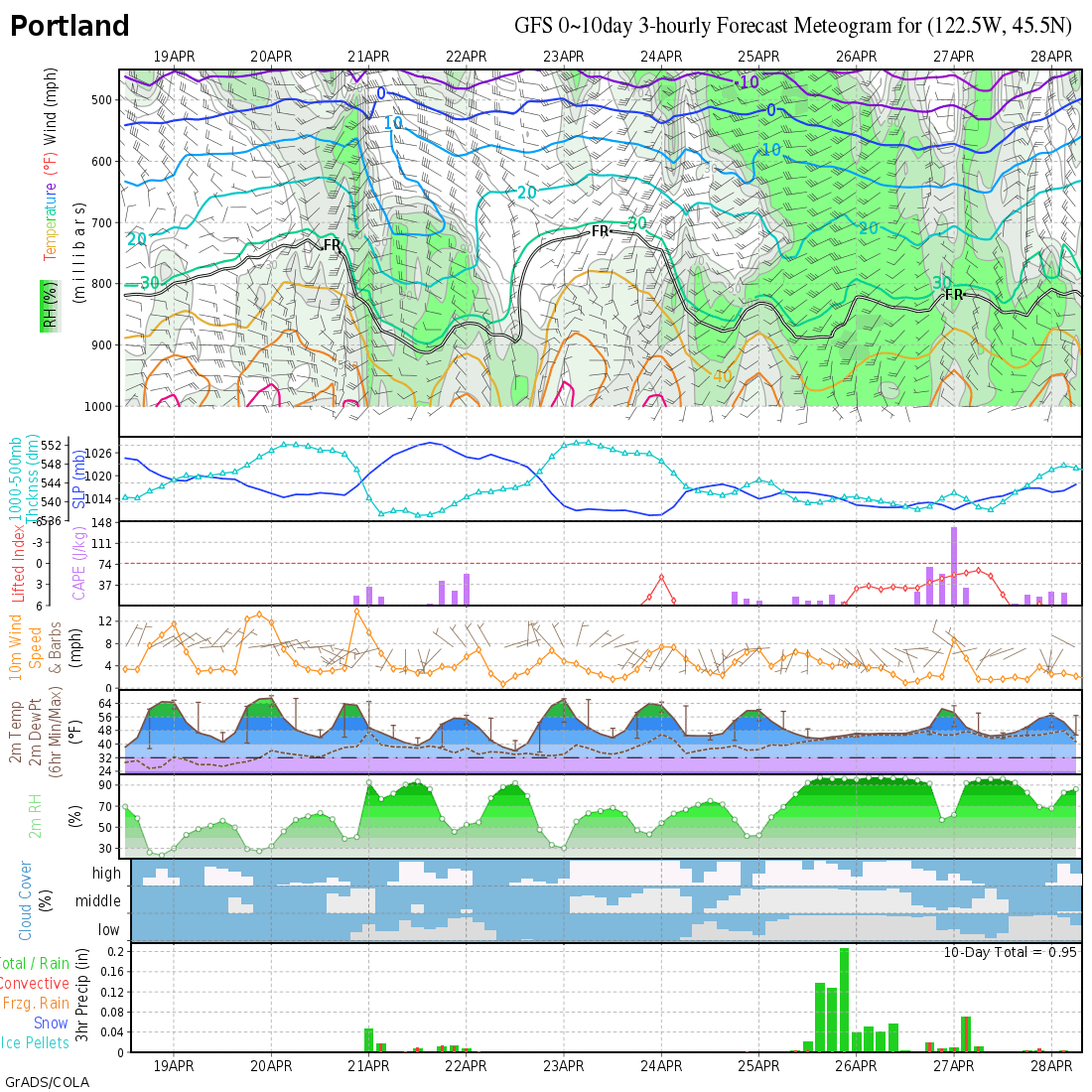
Knowing our vineyard and it's ripening profile is key in optimizing our wine quality. Each of our 35 blocks is individually hand harvested when it is ready. That being said, we do let Ernie's Syrah hang until November. If you want to keep tabs on the vintage weather, follow this link http://wxmaps.org/pix/pdxgfs.png Maybe we will see you there!

Lastly, we consult with Mother Nature. In the Spring, Pinot Noir buds out at the same time the lavender lilac flowers. This is not a coincidence, but a response by both plants to the growing season. They share the same trajectory for a short time.


In the Fall, our volunteer Walnut (Ernie thinks it is an abandoned squirrel's nest) starts to turn yellow when the wine is ready to be taken from the vine. This is our final harvest decision criteria at Amalie Robert Estate. We wait for Mother Nature to give us the "go ahead nod" to home plate.


Kindest Regards,

Ernie