Introduction

Winemaking: The Continuation of Terroir by Other Means.®

Welcome to the Amalie Robert Estate Farming Blog, aka FLOG. By subscribing, you will receive regular FLOGGINGS throughout the growing season. The FLOGGING will begin with the Spring Cellar Report in April. FLOGGINGS will continue each month and detail how the vintage is shaping up. You may also be FLOGGED directly after the big Cluster Pluck with the yearly Harvest After Action Report. Subscribe now and let the FLOGGINGS begin!

Rusty

"This is one of the Willamette Valley’s most distinguished wineries, but not one that is widely known."

- Rusty Gaffney, PinotFile - September 2016

Josh

"Dena Drews and Ernie Pink have been quietly producing some of Oregon's most elegant and perfumed Pinots since the 2004 vintage. Their 30-acre vineyard outside the town of Dallas, abutting the famed Freedom Hill vineyard where Drews and Pink live, is painstakingly farmed and yields are kept low so production of these wines is limited. Winemaking includes abundant use of whole clusters, which is no doubt responsible for the wines' exotic bouquets and sneaky structure…"

- Josh Raynolds, Vinous - October 2015

David

"...Dallas growers Dena Drews and Ernie Pink... showed me this July three of their reserve bottlings and thereby altered my perception of their endeavors. Since these are produced in only one- or two-barrel quantities, they offer an extreme instance of a phenomenon encountered at numerous Willamette addresses, whose really exciting releases are extremely limited. But they also testify, importantly, to what is possible; and what’s possible from this site in these hands revealed itself to be extraordinary!... And what a Syrah!"

- David Schildknecht, The Wine Advocate - October 2013

Wine & Spirits

"Finding that their whole-cluster tannins take some time to integrate, Pink and Drews hold their wines in barrel for up to 18 months - so Amalie Robert is just releasing its 2008s. And what a stellar group of wines: Bright and tart, they possess both transparency and substance, emphasizing notes of rosehips and sandalwood as much as red berries. The pinot noirs alone would likely have earned Amalie Robert a top 100 nod this year. But the winery also produces cool-climate syrah that rivals the best examples from the Sonoma Coast. And the 2009 Heirloom Cameo, their first attempt at a barrel-fermented chardonnay, turned out to be one of our favorite Oregon chardonnays of the year. Ten vintages in, Amalie Robert has hit its stride."

- Luke Sykora, Wine & Spirits Magazine – September 2011

Copyright

© 2005 – 2021 Amalie Robert Estate, LLC

Friday, February 10, 2017

Amalie Robert Estate: 2017 Star Trek into Wine Country - Australians & Romulans

[Captain Kirk] Welcome Aboard, Ensign.

Mr. Scott, you seem a bit more irritable than usual these last few days.


[Scotty] I just can’t get the balance right, Captain!


[Captain Kirk] Is there a problem with the matter anti-matter balance in the warp core?

[Scotty] No, Captain, the warp core is purring like a kitten. It’s the food replicators. Ever since we brought on supplies at the starship base on Berengaria VII, the protein to starch ratio has been way off. It’s like we are all getting an extra portion of beans with every meal. Our supplies might be showing some residual effects of when the Romulans took over the planet.

[Bones] The routine physicals over the past few weeks have shown elevated blood pressure and slight weight gain.

[Captain Kirk] Hmm. Yes, I have noticed my belt has expanded out a notch or so. Well Mr. Scott, you are not going to get the food replicators balanced up here on the bridge.

[Scotty] Aye Captain, I’ll get right on it.

[Captain Kirk] What was that sound?


[Scotty] Oh, that was, ah, a squeak in these boots, Captain. I just had them resoled.

[Mr. Spock] That seems to be a recurring phenomenon across all decks Captain. Logically, it would seem all of the resoled boots are in some way… defective.

[Captain Kirk] Captains log, Stardate 1709.2. We have just completed our mission to resupply the outpost at Farpoint station and are making our way to Earth. We will be passing by the Napa-Sonoma Nebula, which is quite a beautiful phenomenon to witness – from a safe distance. Those that enter seldom return. And those that do return are irreparably harmed. The Neutral zone will be off our port side. The threat of Romulan intrusion into Federation space is always a real and unwelcomed possibility.

[Background discussion] “Live long and prosper. Before I met Mr. Spock, I always thought that was a punch line to a wiener dog joke.”


[Captain Kirk] Keep that to yourself helmsman. Mr. Spock does not have much of a sense of humor.

[Mr Chekov] Approaching the Napa-Sonoma Nebula, Keptin.

[Captain Kirk] Steady as she goes.

[Bones] It’s quite a sight to behold, Jim.


[Captain Kirk] Yes, it is Bones. It reminds me of the Aurora Australis. The Southern Lights of Earth most visible from the southern continent of Australia.

[Scotty] There was a wee couple of islands off the southern coast of Australia. Were they part of the Australian continent as well Captain?

[Captain Kirk] No, those North and South islands were called New Zealand and they were part of a separate and submerged continent called Zealandia. Not to be confused with Portlandia. What is that smell?


[Scotty] Ah, that’s the warp core Captain. We had to vent a wee bit of drive plasma.

[Mr. Spock] It seems that after Earth’s New Year celebration of 2024, everyone in Sydney, Melbourne and Adelaide, Australia flushed at the same time and that completely submerged the Zealandia continent.

[Scotty] We lost a lot of good sheep that day, Mr. Spock.


[Captain Kirk] New Zealand reminds me of Farpoint station in relation to the Napa-Sonoma Nebula. They were such a small colony in a far away corner of the planet bordered by a much larger Australian continent. They also grew some of the same wines. It was called Syrah in New Zealand and the rest of Earth’s wine growing regions, but it was called Shiraz in Australia. Sometimes co-grown and co-fermented with Viognier, as we see in this picture from Amalie Robert Estate. Lt. Uhura, can you get that on the main viewer?


[Mr. Spock] Highly illogical. Why did the Australians choose to ostracize themselves by calling the wine Shiraz? And why would you grow white grapes right next to black grapes?

[Bones] That is a matter of speculation Mr. Spock. It seems that many of the vine cuttings made their way from Hermitage in France to Australia via the penal colony boats coming out of England. Quality control was not really a French “spécialité” at the time and the vine cuttings got mixed together. Anyway, the English solution to crime, sickness and “deplorables” was to simply ship them off to penal colonies in Australia like Port Aurthur in Tasmania. Better than ending up in Perth, I guess.

[Mr. Spock] Australia was a relatively new and undiscovered continent. And it is worth pointing out that those vine cuttings were not about to plant and tend themselves. They needed labor, deplorable or not.

[Scotty] It was rumored that before the Australians flushed them, the New Zealanders had developed warp drive capability. The Australians got wind of this technology and they were able to make it work.

[Bones] There seems to be some breaking wind here on the bridge.

[Captain Kirk] You know, Amalie Robert Estate grows and produces some of the finest Syrah in the galaxy and they are going to be open this weekend. They will be pouring a vertical of their Satisfaction Syrah. I received the communication via subspace just a few days ago.

[Mr. Spock] The timing of this open house and the recent intergalactic publication of Wine & Spirits Magazine seems highly correlated.

[Captain Kirk] Strike while the iron is hot, Mr. Spock.

[Mr. Chekov] Keptin, Amalie Robert Estate is a long ways away from our present course.

[Captain Kirk] Mr. Checkov, could you be more vague?

[Mr. Chekov] Probably not, Sir. But, I could try.

[Lt.Uhura] Captain, Romulan warbid decloaking off the port side!


[Captain Kirk] What was that sound, Ensign!?

[Ensign] I said “Oh Shit!” Captain.

[Bones] It looks like he meant it.

[Captain Kirk] Red Alert! Battle Stations! Spock, have they entered the Neutral Zone!?

[Mr. Spock] They have not, Captain.

[Captain Kirk] On Screen! Lt. Uhura, hailing frequencies open.


[Captain Kirk] This is Captain James T. Kirk of the USS Federation Starship Enterprise. State your purpose.

[Romulan Commander] Earth vessel Enterprise. We have been following your warp engine signature for some time. It seems to be highly correlated to a noxious gas that is emanating from your life support diffusers.

[Captain Kirk] Thank you for pointing that out Commander. Yes, we picked up some bad dilithium crystals at our last stop on starship base Berengaria VII. I believe you know of it.

[Romulan Commander] Yes. It seems to be going around. We were never able to domesticate the dragons there. I see you have made them an endangered species. Your wisdom in this matter escapes me. In monitoring your subspace communications Captain, we have ascertained that you are planning to make a maximum warp speed run back to Earth.

[Captain Kirk] Commander, I have said no such thing. We are observing the Napa-Sonoma Nebula from our side of the Neutral Zone and perfectly within our rights of the agreed treaty to do so.

[Romulan Commander] Quite. So am I to understand you will not be acquiring any Shiraz or Viognier from Amalie Robert Estate?


[Bones under his breath] Jim! He’s an Australian!

[Captain Kirk] I know Bones. Once the Australians figured out the warp core design the New Zealanders had developed, they built a ship and filled it with their deplorables and sent it off into space. They landed on a planet similar to Uranus and called it Romulus. Where the Ale comes from is still a mystery.

Commander, we might be passing by Earth in a few days time. What interest does this hold for you?

[Romulan Commander] Captain Kirk, as you are very well aware, Earth is the only planet in this or any other galaxy that grows wine. That is why we have spared it from any attack and even protected it from the Ferengi, but that is a future episode so don’t spoil the plot. May I call you Jim?


[Captain Kirk] Commander, yes, I am aware we have the only wine terrorr in all of the known, and by definition, unknown galaxies. Jim is fine. What’s your name?

[Romulan Commander] Jim, my name is unpronounceable in your language, unless you have a mouthful of marbles and even then only your Chief Engineer would be so gifted as to even attempt it. You may address me as “My Buddy the Romulan Commander” if it pleases you.

[Captain Kirk] Alright Buddy, what is your interest in wine from Earth?

[Romulan Commander] Dear Jim, you must understand, we have nothing even close to wine to placate our palates during meals, or for meditational purposes. That’s what I meant Jim, meditational purposes. You see on our home world, we seek enlightenment through meditation. We can meditate for hours, and often do. Without wine, it is a sparse and meager existence, but one we are forced to embrace. We have also very recently lost our poppy fields.

[Captain Kirk] But you have Romulan Ale. Romulan Ale is coveted throughout all the galaxies.

[Romulan Commander] Yes Jim, this is true. Have you ever tasted Romulan Ale? Sure, we make an ocean of it and it is virtually all exported. It is like the wines from the Napa-Sonoma Nebula - highly allocated, but never consumed. It is often bought and then resold on winebid.com. It is not for us. We seek the holy grail of wine. We seek Shiraz.

[Captain Kirk] Well listen here, buddy. What if I told you to go pound sand?


[Mr. Spock] Captain, I believe you have made a “Fau-PAUX!” That is Klingon, but roughly translated it means to soil in your own mess kit.

[Romulan Commander] Well Jim, we would not care to “go pound sand.” How would you like us to substitute all the liquids aboard your vessel with Romulan Ale? You would remember us often, but I assure you, not fondly.


[Captain Kirk] I see your point. We could be going past Amalie Robert Estate and they have a very compelling cool climate Syrah. And it has a very appropriate name, “Satisfaction.” Would that be of interest to you? Would you like to get some Satisfaction, buddy?

[Romulan Commander] Oh Jim, yes. We would be very pleased to get some Satisfaction. And I have seen that you are on the “A-List” with Amalie Robert Estate which affords you discounts and other benefits and privileges. Would you be so gracious as to extend your A-List discount to me, your buddy the Romulan Commander? As you know, we are unable to cross to Neutral zone to sign up for the A-List.

[Mr. Spock] Jim, this could go a very long way in advancing interstellar relations between Earth and the Australians, I mean Romulans.

[Captain Kirk] It hasn’t stopped them before. But it confirms one thing, Mr. Spock. They are not A-List material.

Very well then. We shall return to these exact coordinates in one week’s time.


[Captain Kirk] Mr. Scott, I am beaming down to Amalie Robert Estate to get some Satisfaction. I want the food replicators rebalanced and the diluthium crystals changed out before I get back. I can’t seem to stop my eyes from watering.

[Scotty] Will do Captain, even if I have to take the Enterprise apart piece by piece.


[Scotty] Well that should do it Captain. I have beamed a case of Satisfaction aboard the Australian vessel. I mean Romulan vessel.


[Captain Kirk] Yes. And what a vintage… Earth 2010. They had to retrieve this from their “library.”


[Mr. Spock] How curious Captain. The people of Earth were using wine for meditation in their libraries.

[Captain Kirk] Not exactly Mr. Spock. Alright, let’s get out of here. Full Astern! Emergency warp speed!


[Mr. Checkov] What is that, Keptin?

[Mr. Spock] I suspect the Romulans have just discovered that the Satisfaction they have received has been kidney filtered.

[Captain Kirk] Yes, Mr. Spock it would seem, they “can’t get no Satisfaction!”

[Scotty] Captain, we’ve got to dodge that gas cloud. I just got the air cleaned up in here!

[Captain Kirk] Mr. Chekov, take us up to the edge of the Napa-Sonoma Nebula, but do not enter. There is a pretty steep tariff just for going in. With all of the reduction in there, no one will notice this gas cloud.


[Mr. Chekov] Approaching the Cab-Franc sector, Keptin.

[Lt.Uhura] Captain, the gas cloud is dissipating. It seems to have a distance limitation.

[Captain Kirk] Out of gas, are they? Well then, let’s give them a proper send off. Fire phasers!


Friday, January 6, 2017

Amalie Robert Estate: 2017 January Reset

Hello and Welcome,

This is the January “Reset” from Amalie Robert Estate. Happy New Year!

 Go ahead and push it. We know you want to.
Go ahead and push it. We know you want to.

Each quarter we will be updating our website to reflect the transition of the seasons. This e-mail provides you with a glimpse into what’s happening “back on the farm.” You can always check out the full details on our “Back Home” page at www.amalierobert.com. And we know it’s been a while since you have been FLOG’d, but rest assured you will continue to receive monthly FLOG’s as the growing season heats up in April.

The biggest, little news we have to share is that the neighborhood came together before harvest this year and completed a sub-Willamette Valley AVA Petition. This was a fairly lengthy process, in that the original motivation arose in March of 2016 when Ernie polled the neighborhood to determine if everyone wanted to be part of a very large sub-AVA being proposed by a very large global wine company, or should we take control of our own destiny and go it alone. After the obligatory bit of yibber-yabber and back and forth, the dust settled and we had agreed boundaries (based on geology, soils and climate) and a name. And the very coolest thing of all is that the geology and resulting soils supporting our sub-AVA are unique not only to our little area, or even the Willamette Valley, but the entire world! Suffice it to say, it is good dirt and we are fortunate to have put our roots down here.


The Willamette Valley stretches about 150 miles from above Portland to down past Eugene. Our perfect little piece of dirt is located in the mid-point of the Willamette Valley, longitudinally speaking, about 60 miles south of Portland and nestled into the foothills on the western side of the valley. Practically speaking, we are about 15 miles west of Salem.


Oh, and it is a tiny little sub-AVA of about 4,100 acres comprised of the following producing vineyards and wineries that you may have heard of: Amalie Robert Estate (100% sub-AVA sourced fruit and estate bottled), Freedom Hill Vineyard (our neighbor to the east with whom we share a fence line), Croft Vineyards (tucked into the corner and bordering Freedom Hill Vineyard), Erratic Oaks Vineyard (across the road from Croft Vineyards and Freedom Hill Vineyard.) Then up and around the corner is Illahe Vineyards and Winery, Ash Creek Vineyards (across the road from Illahe Vineyards and Winery), Open Claim Vineyards (the next property north of Ash Creek Vineyards), and completing the loop is Mistletoe Vineyards, planted closest to Mt. Pisgah which forms the geological basis for our sub-AVA petition. It’s a pretty good crowd, all in all. And yet to bear fruit is Fern Creek Vineyard.

Based on the TTB’s schedule (who reviews these sub-AVA petitions,) we should know more in about 4 years.


It was a late Christmas present when we noticed this come across the wire. Rusty Gaffney publishes the PinotFile covering California and Oregon Chardonnay and Pinot Noir. And he does the work. He travels around his covered territory and not only tastes wines, but meets the people who farm the vineyards and blend and bottle the wines. He seems to be in touch with his agrarian roots. We can dig on that. This is the 2016 Oregon Pinot Noir All-Americans.


And while we typically do not run with the crowd, if you are going to be in a crowd this is another good crowd to be in. Especially if you can get to the top, or as we like to say, “It’s a long way to the top if you got some grapes to haul!” Queue the bagpipes…

What you do not see here, from the voluptuous 2012 vintage, is The Other Reserve. That’s a story for another time. Maybe when our sub-AVA is approved…


The theme for the first quarter of our brand spanking New Year is “Champagne Deconstructed.” Note: this is not to be confused with the Champagne Riots of 1910, which was not nearly as much fun as you might think it could be.

While it may not be a proven fact, it certainly is a known fact that we (as in all of us) liberate more bubbles (release CO2 into the atmosphere) during the holidays than any other time of year (climate change be damned.) What you may not know is that those metal cages that keep the corks secured until that magic moment presents itself, are held in place by six twists. Each and every one of them, from every corner of the planet, as if the planet had corners. Could that be globalization interacting with your wine experience? However if you are brave and daring, the sabre may be your preferred method of bubble liberation.


So here they are. The three grapes you have been enjoying over the past few weeks, whether you knew it or not! Click here to read the story on Champagne Deconstructed:

Chardonnay is the most widely planted variety on the planet. We produce a very scintillating stainless steel fermented Chardonnay called Her Silhouette. Here is the latest press from the 2014 vintage (not so bad for whole cluster pressed, stainless steel fermented Chardonnay):

All stainless-fermented and aged, this deserves to be on your short list of can't-miss choices in a domestic Chardonnay. Year after year it scores well, with fresh, vivid fruit, a crisp and inviting mouthfeel, lively spices and ripe tree fruits. There's a seam of wintergreen running alongside in this new vintage, leaving your mouth feeling scrubbed clean.
          - Paul Gregutt, Wine Enthusiast, August 2016 - 91 points, Editors' Choice

Pinot Meunier mind you, is not damaged goods - used maybe, but aren’t we all? Often the unsung hero in Champagne, it can add body and texture to the final assemblage. And while the Parisians will not come right out and say it, the most acreage under vine in Champagne is planted to Pinot Meunier. This wine completes the “Alt-Red” part of the program.

We do this too. In fact it is the highest rated still Pinot Meunier from Oregon according to Vinous and the Wine Advocate. This Forbes article “The Grape Divide” featuring Dena is also a good reference for this variety.

2014 vintage: Deep red. Aromas of dried cherry, redcurrant and rhubarb, with a mineral element adding vivacity. Bitter cherry and anise flavors are enlivened by juicy acidity, picking up a smoky nuance on the back half. This lively, focused wine finishes with very good cut and smooth, late-arriving tannins.
          - Josh Raynolds, Vinous, January 2017 - 92 points

Pinot Noir, be still my beating heart. With the exception of the miniscule plantings of Chardonnay, Pinot Meunier, Syrah, Viognier and 24 Gewürztraminer vines, the rest of our 55,000 estate grown and produced vines are Pinot Noir. And on our farm, we make some blends - EIEIO. And they are all pretty farmin’ good - EIEIO.

And just like wine, there are all kinds of different dogs for all kinds of different pee-poles. Note: This is Ernie seeing if you are still paying attention.

Today we are talking about the Dijon Clones bottling - One of the most diverse Pinot Noirs in our portfolio. It is a blend of all 7 of the Dijon Clones we grow throughout our 35 acres of producing vines. Each small block of vines represents a single clone and is grafted onto a rootstock to best match our undulating soils. Fermented in small 1.5 ton fermenters, punched down by mere mortals with indigenous yeast and whole clusters for that ever evolving stem tannin goodness. Matured for a year and a half in barrel to soften those alluring stem tannins and another year in the cellar before release. The Dijon Clones is a consistent performer and built to evolve gracefully over time.

2008: Light, bright red. Seductively perfumed, expressive aromas of dried red berries, allspice and cinnamon, with a slow-mounting floral quality and a hint of blood orange. Light in body but potent, offering sweet redcurrant and raspberry flavors that stain the palate. An intense spicy overtone carries through the nervy, mineral-driven finish. Lots of flavor intensity here but there's zero fat on this wine.
          - Josh Raynolds, Stephen Tanzer's International Wine Cellar, July/Aug 2011 – 92 points

2009: Bright red. Sexy, spice-accented aromas of red berry preserves, potpourri and sandalwood, with a touch of cola in the background. Shows very good intensity and sweetness, offering lithe raspberry and cherry flavors and a hint of bitter blood orange. Closes on a spicy note, with excellent clarity and persistent sweetness.
          - Josh Raynolds, Stephen Tanzer's International Wine Cellar, July/Aug 2012 – 92 points

2010: Bright red. Heady, exotic aromas of fresh red berries, Asian spices and potpourri, with subtle smoke and mineral nuances adding complexity. Silky, expansive and appealingly sweet, offering intense raspberry and rose pastille flavors and a strong spicecake quality that builds on the back half. Pure, focused and strikingly persistent on the finish, which is firmed by fine-grained, harmonious tannins.
          - Josh Raynolds, Stephen Tanzer's International Wine Cellar, July/Aug 2014 – 92 points

2011: Bright red. Potent red berry, floral pastille and incense aromas, with an exotic hint of blood orange emerging slowly. Lithe and sharply focused, with its intense raspberry and bitter cherry flavors communicating a suave blend of power and finesse. Delivers a wallop of sweet red fruit character without any excess weight and finishes spicy and very long, with a bright mineral note.
          - Josh Raynolds, Vinous, October 2015 – 91 points

2012: Vivid red. Pungent red and dark berry scents are complemented by underbrush, mocha and sandalwood, with a mineral element adding lift. Juicy and concentrated on the palate, with spice-tinged black raspberry and bitter cherry flavors becoming sweeter with aeration. Dusty tannins sneak in late on the long, focused finish, with the berry and spice notes echoing emphatically.
          - Josh Raynolds, Vinous, October 2015 – 93 points

2013: Vivid red. Smoky red berries and cherry cola on the pungent, mineral-tinged nose. Pliant and seamless in texture; a spicy element emerges on the back half and adds bite to sweet raspberry, cherry and floral pastille flavors. Sappy and very well-balanced, displaying impressive depth for the vintage. Closes long, floral and seamless, with supple tannins adding gentle grip.
          - Josh Raynolds, Vinous, December 2016 – 92 points

And that, in some combination, is what you have been enjoying – with gas of course. Hopefully it was Rosé. We love a good Rosé. In fact we have two of them queued up for Q2 - Scooby Do!

Happy New Year!

Dena & Ernie


Wednesday, November 23, 2016

Amalie Robert Estate Vintage Update: 2016 Harvest After Action Report (AAR)

Hello and Welcome,

This is the 2016 Harvest After Action Report (AAR) from Amalie Robert Estate. Let’s get right to it, then.


Pinot Noir ready for The Great Cluster Pluck of 2016!

As most of the world is aware the United States held a presidential election in 2016, a leap year. But what you may not be aware of is that while a presidential election occurs every four years, not every presidential election year falls on a leap year. (To everyone who voted in a United States presidential election when it was not a leap year, we salute you!)

The reason is not that farming obvious. This is why we are here, the farming geniuses that we are, to explain the farming significance of these sorts of things. As you know, we farm using the Julian calendar, as do most farmers, where each day is successively numbered and the days in a year total 365 except for the leap year which tallies 366 days. The most important thing to know about a leap year is that you have to work an extra day, usually without extra pay. But each and every year in the fall we get an extra hour, which we bank for harvest.

But the world mostly runs on the Gregorian calendar, which dictates that years marking the end of a century (i.e. multiples of 100) are only leap years if also divisible by 400. The year 1900 was not a leap year, but the year 2000 was. This difference comes from the need to account for the slight rounding error that occurs by counting each year as 365.25 days when it is actually 365.24. Really… And if our orbit around the sun decays, we could be in for more of these leap years. Might we have one for the mid-term elections as well?

By skipping leap years on turns of the century that are not divisible by 400, the Gregorian calendar is able to compensate for the 11 minute loss of accuracy each year. This is an example of where central planning of a calendar provides everyone certainty, while the distributed decision making of daylight savings time keeps everyone guessing. Could daylight savings time be an example of “negotiated reality?”

However, you can make a little extra coin at super trivia with these facts. The presidential elections held in the years 1800 and 1900 were not leap years. The presidential election held in 2000 was a leap year, but the 2100 presidential election will not fall on a leap year. Projections beyond the year 2100 are an exercise left for the reader.

“Why for fifty-three years I've put up with it now…”
- The Grinch on presidential elections.


The Great Cluster Pluck of 2016 commenced on September 23rd, as they always do – in earnest. Once again the rascally little Gewürztraminer was the first grape “in da house.” 2016 was the second year of fruiting and the vines yielded a more sustainable 30 bottle production. As you may recall, the 2015 production amounted to a whopping 9 bottle lot. But then things started to get a bit more serious.

All summer we were seeing a redux of the 2013-2015 vintages – hot and dry. Warm nighttime temperatures again were the norm, and this kept the vines actively ripening their wine berries well into the night when they should have been dormant. That’s their job - responding to their climactic conditions. Our job is to figure out how to farm them, and this year we had the advantage of three years past experience. But three years of experience we did not have. What we had was one year of experience three times.


Vintages that we really cut our teeth on were 2007, 2010 and 2011. These were tough vintages to achieve full ripeness. But we did it by managing the canopy leaf exposure and water usage, adjusting the crop load and using the available soil moisture to the vine roots via the vineyard floor to adjust the ripening curve. When you look in the farming toolbox, those are the tools a dry farmed vineyard has to work with, and maybe some duct tape. So while knowing how and when to employ those tools as well as actually getting the work done on time is important, the thing you must know is when to harvest.


“Well, you have to know these things when you are a king, you know.”


 - King Arthur, as interpreted by Monty Python


First Peasant: Who's that there?
Second Peasant: I don't know... Must be a king.
First Peasant: Why?
Second Peasant: He hasn't got shit all over him.

 - King Arthur seen by his subjects, as interpreted by Monty Python


- But everyone does it a little bit differently, as interpreted by Monty Python


Even if we think we get it right in the vineyard, the true test is pulling a cork 5 to 7+ years after the vintage – leap year or not. We suppose, however, more wine is consumed in leap years than not, especially ones divisible by 400.

But Ceteris Paribus it was not, as 2016 provided a few surprises that we did not have in the three previous years. The foremost was a broken clutch cable on the hedging tractor. Fortunately, Ernie was in the process of completing what would become his last hedging pass, when he pushed the clutch pedal to the floor and it stayed right there on the floor. The tractor, however, kept moving thus providing a sudden sense of urgency and attention to detail focused on arresting forward progress forthwith.

 
The broken clutch cable from the hedging tractor

The hedging tractor in motion – Whoa!

Timing is everything and the field crew was just headed to the barn at the end of their day. With the help of 3 able bodied lads pushing the disabled tractor, Ernie was able to get up enough speed to power shift back to the shop where the tractor would lie in wait for a new clutch cable. Advantage: Vines.


And we earned a 97 point review for The Reserve Pinot Noir. That was new.

“This is one of the Willamette Valley’s most distinguished wineries, but not one that is widely known...

The vintner’s favorite barrels of the vintage. Whole cluster inclusion and fermentation with feral yeasts. Aged a minimum of 18 months in French oak barrels. Moderately light reddish purple color in the glass. Exuberant aromas of cherry, wildflower, baking spice and nutty oak. The gorgeous core of black cherry fruit is blessed with supportive, age worthy firm tannins. Flavor notes of exotic spices, vanilla and nutty oak add interest. Long in the mouth and extremely long on the extraordinary finish. A serious, connoisseur's wine that needs time in the cellar for full enjoyment. Even better when tasted several hours later and the following day from a previously opened and re-corked bottle. Did I say the finish goes on and on?”

     - William "Rusty" Gaffney, M.D., PinotFile, September 2016 - 97 points


Another significant difference from previous years was that we had a lighter fruit set. That gave us less fruit on the vine to distribute the rapidly accumulating sugars. That fact, combined with the rapidly advancing heat accumulations foretold the story of an impending harvest. But what about the rain, you ask? There’s got to be rain, right?

Apparently, the rain dance manual was revised and Ernie did not get the update. Oh sure, he tried and tried, but the rain we received through mid-September was not enough to hold back the few blocks of young vines we have grafted onto shallow rooting rootstocks. All vines accelerate ripening (aka accumulate sugars) when they run out of available soil moisture in their root zone. Young vines are at a significant disadvantage due to a smaller and shallower root system that has yet to colonize all the available soil profile and extract every last bit of soil moisture.

But wait, there’s more to that story. Once the vines run out of available soil moisture, desiccation sets in and the vines scavenge water from the wine berry. Warm sunny days with warm breezes exacerbate the vines drought condition. From a numbers point of view, the sugars are going up (concentrating) which means the wine berries are ripening. But the acids are going up as well, and that does not mean ripening is advancing. Increased acids along with increased sugars mean the wine berry is losing water to desiccation or the vine is taking it for the leaves. Flavors and aromas are not maturing in a commensurate manner with the sugar accumulation and alcohol potential. When that happens, you gotta pick ‘em. And by then, it’s a full-on cluster pluck.

Now we add in the human factor. There are only so many hands available to pick wine berries on any given day. All the growers whose acreage resides on the same soil type that is farmed pretty much the same way find themselves in a very small available labor pool. While bigger is not necessarily always better, we will go with the bigger labor pool every time. And that paid off handsomely during the last 10 days of our cluster pluck. We had great crews for the very simple fact that no one else was harvesting.

And here is the history lesson for today. Shallow rooted vines such as those grafted onto RG, 101-14, 3309 and Schwarzmann feel the burn before more deeply rooted vines such as those grafted onto 5C. As the north Willamette Valley has always had a marginal climate for Pinot Noir, meaning a cool growing season with fall rains, most growers have tended to plant vines with shallow root systems that will dry out and advance ripening before the ass-end falls out of the vintage. The Drouhins also had a hand in this mentality as they planted shallow rooting rootstocks when they came to Oregon from Burgundy in the 1990s.

As we were planning our vineyard at the turn of the century, Ernie asked Robert Drouhin why they chose the shallow rooting rootstocks that they did, and his reply was, “That’s all we could get.” And the Oregon wine industry mostly followed their lead in rootstock selection. (A parenthetical note: The Drouhins also have irrigation which can extend a hot and dry vintage. Most of the Oregon wine industry does not have irrigation.) Due diligence, you gotta do it…

Ernie with a profile of our sedimentary Bellpine soil  – circa February, 2006

Except Ernie, of course, who planted a significant portion of our vines grafted onto 5C rootstock. Texas born and bred, the 5C rootstock most closely matches how own rooted vines grow in the soil. That drought tolerant rootstock develops root systems that are long, deep and continuously searching for water. That means you will be waiting a bit longer in most vintages to harvest. In warm years this means more hang time for aroma and flavor development with less sugar accumulation that lowers potential alcohols. In cool vintages (2007, 2010 and 2011) those wines are sublime. Love that Bellpine soil!

The first half of September gave us about 0.28 inches of rain. The last half of September is where we started to rekindle a glimmer of hope with 1.55 inches of rain. And then, apparently, Mother Nature got around to Ernie’s improperly formatted requests for rain – all of them. So we then commenced the cluster pluck dance. The second day of October gave us 0.11 inches of rain mostly during the early morning hours. Not too bad and we cluster plucked all day long.

The 2016 Harvest Target Package Map

The third day of October gave us 0.82 inches of rain and we sat that one out. However the vines did not. They were busy rehydrating the wine berries and lowering the alcohol potential of our yet to be picked wines. We sat back and looked over the 60 or so tons left to cluster pluck and thought “If we lived in Dundee, we’d be done by now!” Volcanic soils…. Oh really?


After a few days of cluster plucking, we were right back in the groove just like the movie Groundhog Day. It’s 5:30 am and time for a steaming flagon of Dark Monster morning stimulant. Up to the winery, fire up the Landini (aka landweenie) tractors, check the tires and work the clutch cable – check! The crew (usually) arrives in the predawn glow, and we are ready to go!


Sunrise on the first day of harvest (aka The Great Cluster Pluck of 2016)

First light on the morning of harvest is an awe inspiring experience. Each harvest represents not only a year’s worth of decisions and field work, but also is the culmination of all the efforts a vineyard represents. Deciding vine spacing and clones along with rootstocks, laying out vine rows and then fixing the vine rows to be straight, planting vines, pounding posts, running wires and each year's farming plan represents an enduring physical implementation of an ever evolving mental construct. If you are considering this type of endeavor, may we caution you: Never delegate planning.

We racked up another 0.82 inches of rain to close out the first week of October at 1.64 inches. The vines were responding to the available soil moisture and the berries were rehydrating. The clusters were also starting to soften up which meant it was time to get ‘er done – Right Farmin’ Now! And we had a fairly nice second week to do so with just another 0.08 inches of rain – that’s 1.72 inches, and counting…

It’s just one of those farming things you need to know. An acre inch of water is 27,154 gallons and weighs in at about 113 tons. We have 1,452 vines per acre, so that inch of rain covering a single acre means about 18.7 gallons per vine. So logically, 3.15 inches of rain would mean about 59 gallons of water per vine. That’s how things were looking to start the third week of October.

Chardonnay at first light, ripe and ready to be cluster plucked.

Having lived through the nine inches of rain gifted to us from Typhoon Pabuk in 2013, and making a very scintillating late harvest Botrytis Chardonnay, we decided it was time to take the Chardonnay before that opportunity presented itself again. So we did, first thing in the morning, October 11th when the buckets were clean and then we followed up with the last of the Pinot Noir.

Well let’s see, what’s left? That would be our little acre of Côte Rôtie. We have four clones of Northern Rhône Syrah representing about 1,200 vines with about 300 Viognier vines in the adjacent block. We took those perfectly ripened clusters on Wednesday, October 12th. And that concluded The Great Cluster Pluck of 2016.


However, the rain was not finished with us. Beginning just after we cluster plucked the Syrah and Viognier, the heavens opened and treated us to a wondrous showing of 360 tons of rain on each and every acre! Believe us when we tell you, that’s a lot of farmin’ rain. And there was more, much more to fill out the rest of the month. What a relief to have had the good fortune (aka luck) to cluster pluck all of our fruit and intern it into fermenters and tanks before the torrential rains closed the harvest window.

And now, we present the SPAM (Significant Predetermined Analytical Measurements):

The full rainfall tally for the month of October was 11.02 inches and that represents the second wettest October since records were kept in Oregon. We have only been here since the turn of the century, but it is clear that Ernie is going to get the updated rain dance manual for 2017. Total rainfall for the 2016 growing season was 19.02 inches.

The full month of September degree days totaled 315 bringing the year to date total to 2,137 degree days. Degree days through our last day of harvest on October 12th piled on another 40 for a growing season through harvest total of 2,177 degree days. And while this 2016 degree day accumulation seems innocuous, bear in mind the significant impact of the heat accumulation was felt beginning in July and carried through to September with virtually no meaningful rainfall before harvest.


We now transition from harvest 2016 into renewal for vintage 2017 by pruning the vines and wrapping a cane down on the wire. That cane will sport 12 to 18 shoots that hold the promise of vintage 2017. It’s a big job with over 50,000 vines to prune and tie down, work that is all done by hand. If we are lucky, and good, we will complete this task in mid-March, 2017. Trust us, that’s a lot of hand …  work.

Pinot Noir vines with new spring shoots

Phase I: Pinot Noir vines after the Great Cluster Pluck, just before pruning

Phase II: Pinot Noir vines after pruning and brush pull

Phase III: Pinot Noir vines with canes wrapped on the wire


In this leap year, it is somewhat poignant that the country is also transitioning from one vintage of administration to the next. The most any administration is allowed is 2 vintages. We can only imagine a world in which we would be able to prune the vines just once and get two vintages out of them. Now that would really be something.

And the calls now are to “Drain the swamp!’ Well, we have something to say in that regard: “Been there, done that!”


We took this image from the Lincoln Memorial looking to the Washington Monument and you can plainly see the reflecting pool is drained. It’s no small thing, it’s Yuuge!


Of course after we left it got filled up again, but that was not our doing.

And that’s how the way it was: The Great Cluster Pluck of 2016.


Until we farm again, stewards of the land and fermenters of Pinot Noir, we remain.

Kindest Regards,

Dena & Ernie

Friday, September 16, 2016

Amalie Robert Estate Climate Update: Special Edition 2016 Mid-September

Hello and Welcome,

This is a Special Edition Mid-September Climate Update.

It used to be that October was the month we needed for Mother Nature to put the finishing touches on the vintage. Patiently, or not, we waited those last few weeks for sun, wind and drizzle to add character to the aroma and flavor of our wines. Well, that month has now become September.

In a year like 2016 (and 2015, 2014, 2013 and 2012,) the harvest decisions, while celebrated as highly deliberative and cerebral, really come down to this: “How much longer can we afford to leave the wine berries out there before the sugars are too high?” And the answer to that question is the summation of the type of rootstock used, the age of the vine, the crop load, the depth of soil and the available soil moisture. And while most of those decisions were made when the land was purchased and planted (and the climate somewhat cooler,) the remainder has to do with how the vineyard has been farmed for vintage 2016.

So we focus on what we have in front of us, while keeping the history of the vineyard we planted as our touchstone. And what we see right in front of us is RAIN! That’s right, we have rain for the weekend! It’s just like living back in Seattle, or Ireland, or London. And since canopy management is our mantra, we can afford to have a little moisture rehydrate the soil, reactivate the soil microbes for a little nutrient exchange and in turn hydrate our vines and fruit without concern of rot compromising our wine. So, the call is for rain (See the bottom graph.) We say, “Bring It On! RIGHT FARMING NOW!"


Rain will help rehydrate the wine berries and lower the concentration of sugars - fructose and glucose. That will allow us to hang a little longer to achieve those character building aromas and flavors in our wine berries. And then, and only then, shall we commence THE GREAT CLUSTER PLUCK OF 2016!

But to be fair, we have started harvest a little early, the farming geniuses that we are. Just like the new fangled ritual of early voting by mail instead of waiting in line on the big day. And what we have been harvesting are the late to ripen wings for the Bellpine Pearl. We left the wings on until the last possible moment again this year. While ripe in their own particular idiom, they are not what we want in the fermenters. So we harvest these little knobs, gently press the pale juice from them and make our Blanc de Noir – Bellpine Pearl – Sans gas…

For the first half of September the numbers are small, so we will do this quickly. We have accumulated 170 degree days for the first 15 days of September 2016, yielding a less than expected vintage to date 1,992 degree days. By comparison, we had logged 168 degree days for the fist half of September in 2015 for a growing season to date total of 2,165 degree days. Ceteris Paribus, or so it would seem.


There was no measurable rainfall for the first half of September. But that is about to change.

Kindest Regards,

Dena Drews
VP Sales and Editor in Chief


Wednesday, August 31, 2016

Amalie Robert Estate Climate Update: 2016 July-August

Hello and Welcome,

This is the July-August Climate Update from Amalie Robert Estate (a twofer.)

After a whirlwind April, May and June, the months of July and August gave us a much needed respite. From the heat mind you, not the work. The work continued unabated to meet a compressed growing season timetable. The hand work of putting up miles and miles of catch-wires and clipping them into place preceded the tractor mounted hedging work that allows for the hand work of plucking a few leaves to provide perfect sun exposure to our wine, which happens to still be in berry form at this particular moment.


“You don’t have to be crazy to grow Willamette Valley Pinot Noir, but it helps.” - Ernie Pink referring to vintage 2016

As you read this stream of consciousness, the first day of harvest is rapidly approaching. And from the looks of things it will be from the humans not the birds. Although, it is quite assured that they will find their way into a few clusters before the last chapter on this vintage is written. But as Darwin would point out, only the fittest survive. What he did not elaborate upon was his definition of fittest. (At Ernie’s former employer, it was well understood that it was better to be lucky, than good.)

We employ electronic bird callers to attract raptors of all kinds. These bird callers let the local aviary know this is where the action is. It is a common sight during harvest, and the few weeks preceding, to see various and assorted falcons and hawks cruising the vineyard. The fruit eating robins and starlings not so much, but there are daredevils in any species.

Which brings us right up to the fall weather decline of the yellow jacket. These little earth dwelling blighters are not so much of a problem early in the morning when it is cool. But leave a tote bin of wine berries out in the afternoon sun, and it is a whole different ball game. They know their time is coming to an end, and they have no fear. We are ready for them. We have yellow jacket traps baited with salmon fins and skins that we get from our local fish monger. Add a little sunshine and whew, that smells good! They prefer protein over sugar, so we oblige them.

We know what you are thinking: Once you catch a whole mess of yellow jackets how do you prepare them, and more importantly, what wine do you serve?

It may seem as if we meander somewhat aimlessly, unburdened by reality as it were, but to be clear, we meander with a purpose.

The most important thing to remember about harvest, from the human point of view, is that those grapes are not yours until you get them safely into the winery converting sugar into alcohol in a microbially stable and leak proof vessel. Yeah, it’s a long way to the top if you got some grapes to haul…

July and August, while providing some heat spikes, were fairly temperate and provided a downward shift in trajectory from the first half of the growing season. Why it even rained in both July and August! Not as much as Burgundy, of course, and we missed out on the summer hail, which is always nice.

We recorded 0.69 inches of rain for July and 0.36 inches for August for an April to date growing season total of 6.29 inches. Burgundy will average about 2.5 inches of rain in both July and August. Rain during the summer months, and the resulting humidity, can present the winegrower with mildew and bunch rot challenges.

Lackluster canopy management and ill timed rains can add up to acres of compromised fruit. Factor in the fact that we leave more leaves in the fruit zone to provide shade to temper our tannins and canopy management becomes more of a religion than just a good idea.

The last act of farming before harvest is thinning. This is the act of trimming off a portion of the crop. It is done for a variety of reasons including: A) to meet contractual tons per acre requirements, B) to remove excess crop that has no chance of ripening, especially in a cool to cold vintage, and C) to remove whatever you do not want to end up in the fermenter.

Let’s talk about C. We always clip off the wings before harvest. The wing is a fruiting tendril that fruits about a week after the adjacent main cluster and, ergo, ripens after the main cluster. However we have found a home for a portion of these Pinot Meunier and Pinot Noir wings in the Bellpine Pearl Blanc de Noir.


The other thinning targets are short shoots that did not make it to the top of the canopy. Not enough leaves to ripen those clusters, so off they go. Sometimes the vine likes to show off and sport 3 clusters on a singe shoot while all of the other shoots just have 2 clusters. Well, 3 is a crowd and that top cluster will always ripen last, if at all, so off it goes. And sometimes we see a bunch of green berries on a cluster when all of the other clusters have fully turned color. Maybe it didn’t get the memo or just lost track of the days. We have no way of knowing, but we do know that is not something we want in the fermenter. Adios.

Thinning is also a way to influence hang time. Hang time is the time the wine berries need at the end of the season to develop aroma and flavor. The later you thin, the slower the sugars will build and the more hang time you will have. While hang time is generally a good time, you are also developing, or overdeveloping, tannin from the skins. We know we want hang time, but we also know we don’t care for excessive tannins and that is one reason we leave a few extra leaves to keep our Pinot’s elegant. The Syrah, however, is another matter.

And in a vintage like this one we are looking for hang time, but watchful for excessive sugar concentration from desiccation. Desiccation happens when water leaves the wine berry resulting in more concentration of sugar, but not more aroma and flavor development. Desiccation can happen when the vine can’t get enough water from the soil, so it takes it from the wine berry. It can also happen when we experience warm and dry breezes from the east under sunny blue skies. This last condition will also ratchet up tannin (over) development.

As a dry farmed vineyard we don’t pray for miracles, we depend on them. And the miracle we are depending on again this year is a little September rainfall, like in the 1 to 2 inch category. It has happened every year since the warm to hot vintages began in 2012. But like a certain adult recreational activity, you can never really be sure when you are going to get it, how much you are going to get or just how long it is going to last. In fact, premature fermentation appears to be a problem again this year. Not at Amalie Robert Estate of course, but it is out there.

And with that, we will do the numbers.

July is when we started to notice Mother Nature was losing her grip on the throttles. The high temperature for the month was 96.4 and the low temperature was 44.4 degrees Fahrenheit providing a total of 478.05 degree days for July, and a growing season to date total of 1,283. Throw in the sixty-nine hundredths of precipitation and that’s the story, morning glory.


August continued July’s trend, but had a cold snap where Ernie actually built a fire. Ok, it was just a bunch of empty wine boxes, but we still had combustion. The high temperature for the month was 102.4 and the low temperature was 43.4 degrees Fahrenheit providing a total of 538.7 degree days for August, and a growing season to date total of 1,822. Precipitation was 0.36 inches, and is significant in that August is typically dry, Pierre.

So, here we are at the end of August sitting at 1,822 degree days. In retrospect it feels like 2009 where we had an early start to the season, but a moderate summer and cool fall. Or as Ernie recently opined, “It looks like the ass-end is falling out of this vintage.” He’s not really cut out for “prime time.”


If it has been a while, you may want to check out a 2009 Oregon Pinot Noir. That vintage could be coming around again. If you don’t have any, we do. In fact, we have the highest rated 2009 Oregon Pinot Noir - “The Reserve” according to those fine folks over @VinousMedia.

For reference, 2016 ended June with 805 degree days, and was the hottest growing season on record. Now we sit between the 2014 and 2013 vintage. Here are the degree day accumulations through August for the past 4 vintages: 2015: 1,997, 2014: 1,886; 2013: 1,737 and that climatically transitional vintage 2012: 1,474 degree days, which took us from the frigid 2010-2011 vintages to the hotter than Georgia asphalt years. Yowza! What a peach!


And, as we pointed out, there will be September rain, but the when, how much and length of such a tryst is TBD. It will most certainly be a localized event. Your mileage may vary.

Kindest Regards,

Dena & Ernie


Saturday, July 30, 2016

Amalie Robert Estate Vintage Update: 2016 Pinot Noir In Flagrante!

Hello and Welcome,


If farm equipment could talk:

“Torque my lugs, change my oil, lube my chain, grease my zerk!” or “Hey, does the lack of air pressure make my tire look fat?” or “You know, that little red light on the fuel gauge means time for more diesel and can save you from a very long walk.” or “It’s just a dipstick, nothing to be afraid of” and “Winegrower? Oh really…”

But it can’t. What it can do is stop working. And that is a language that everyone understands. As in “No coffee, no workee!”

This is why Ernie takes advantage of the small breaks in the farming schedule to perform maintenance. And for the “non-farmers” reading this we would like to point out the two types of farm maintenance. Regularly scheduled maintenance is usually based on hours driven for tractors (think miles for cars and trucks) or a specific period of time such as annually.

Percussive maintenance is just what you think it is and can be performed at any point in the farming cycle. It is usually performed as a response to operating a piece of equipment outside of its designed operating parameters. Or it could be the case that the last regularly scheduled maintenance was performed…never. The result however, is always quite binary:

1) The act of repeatedly applying force (and or heat) over a brief (or extended) period of time has enabled the equipment (or implement) to function, in at least some capacity for a limited amount of time such that farming operations may resume. Pain relievers (and perhaps an ARB) are in your immediate future. OR

0) It has become painfully obvious that the equipment (or implement) has (possibly prematurely) reached the end of its useful life and no amount of percussive maintenance is going to change that sad (and about to get expensive) fact. Fully depreciated, if you will, or just plain old worn out, the only thing you have going for you now is trade in value. In retrospect, you could have done without that bigger hammer. Time to go shopping for farm equipment…

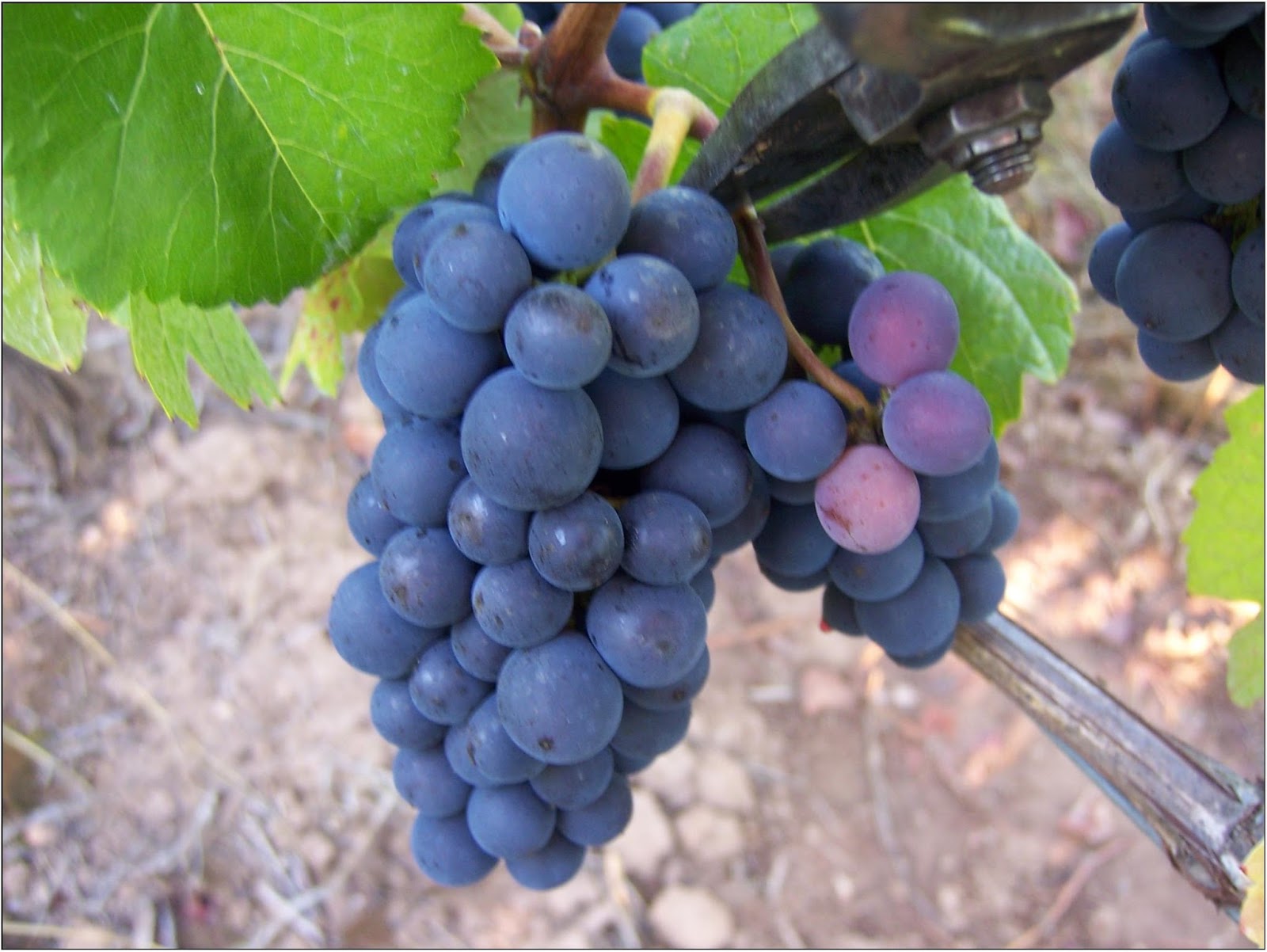
But not today! Today we see another blazing indicator that harvest is on its way. Those little pink wine berries are telling us that it is time to get the harvest equipment “properly” maintained, or replaced, as the case may be.


In your mind’s eye, just imagine how the likes of Dick Erath or David Lett or Dick and Nancy Ponzi or Bruce Weber felt when they saw the very first pink wine berry on their very own vines representing their very first harvest. And you know, it wasn’t all that long ago. We take it for granted now in the Willamette Valley, but it wasn’t always so.


The other thing that we are paying attention to at Amalie Robert Estate is the trending manifestation of this event year over year. This year, we saw the very first wine berries blaze on July 22nd (but it is a leap year.) The 2015 growing season showed its colors on July 23rd. The historical average vacillates around August 15th. Also of note is the comparative degree days from April though June: 2016 has logged 805.1 degree days and 2015 had logged 799.1 degree days.

Pardon us while we bring the elephant into the room. We see the same summer weather pattern that we have seen since 2012. We thought 2012 was a hot year until we farmed each successive vintage afterwards. The humans will most likely notice the high temperatures and marvel at the number of days above 90 degrees. Meh…


The vines will take all of that heat and sun exposure and turn it into energy to ripen their seeds, allowing them to reproduce and then nod off for a 6 month nap. And they will be doing it all night long.

That is the farming difference we see from the most recent vintages compared to say 2007, 2010 and 2011. The cooler vintages are “more cool” because the nighttime temperatures keep the vines’ ripening curve in check. All of that photosynthesis does no good to the vine until it translocates the energy from the leaf. And that translocation slows down significantly when the temperature drops below 50 degrees.

So, the nighttime temperatures are once again telling the story of the vintage. Cool nights mean slower sugar accumulation and more time on the vine to develop aroma and flavor. Warm temperatures speed things along until we find widespread premature fermentation due to harvest decisions being based on sugars to keep the alcohols below 15%. Yeast die at 15.6% alcohol and will leave you with sweet wine – Good to know.

And the most fascinating thing to consider is why does a corkscrew, when inserted properly into a cork, turn in a clockwise manner. From a physics point of view, it could have been made to work just the opposite. Lefty Loosy, Righty Tighty.

And if that cork just won’t give it up, Port Tongs could be in your “percussive maintenance” future. Add fire, and you are going old school now. Note: gloves will be a useful thing to have at the beginning of this process. Welcome to our world.

Blaze on you crazy wine berry.


Kindest Regards,

Dena & Ernie